A Very Wicked Problem

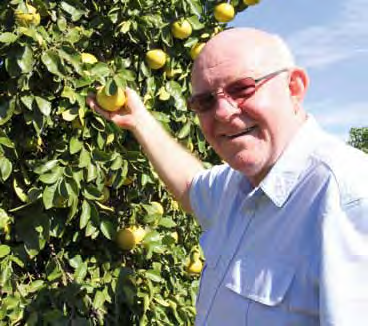
Today’s guest blog 1 is by Gerry Andersen who is the Chief Executive Officer of Foodbank NSW.
image

Gerry has also been involved with the RAS of NSW for the past 25 years and is currently a RAS Councillor and Chair of the Sydney Royal Dairy Produce Committee. I had the pleasure of working with Gerry and the superb team from the Sydney Royal Dairy Produce Show in February this year when I had the honour of stewarding in the ice cream judging section. See the post I wrote about my day here

Gerry’s work with Foodbank has perfect synergies with the ethos of the Archibull Prizewhere we ask participating students to reflect on sustainable food production and also their role in sustainable food consumption. I am confident like me you will be astounded by the amount of food that is wasted in this country and as a farmer producing some of this food that ends up in landfill it breaks my heart. It will also break your heart to read about the other end of the spectrum that Gerry shares with us in this post. It just beggars belief that this can happen.

Each year two million Australians will rely on food relief and around half of them will be children who often go to school without breakfast or to bed without dinner.

Are the lucky ones so self absorbed and we live in our own little worlds and forget what really matters?. I just don’t know. What do you think?

I do know that as a farmer I am very proud of my fellow farmers participating in the Waste Not Want Not program.

This is what Gerry has to say………………..

Waste not; want not

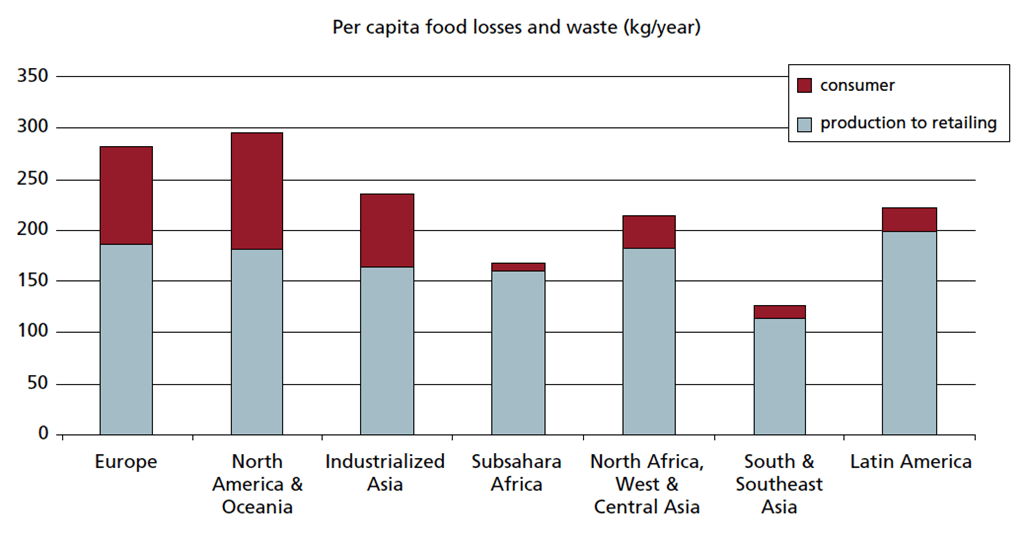
Food waste is a complex social, economic and environmental problem that is having an increasingly negative impact on our world.
wastegraph

There’s no doubt that when it comes to food production, Australia truly is the lucky country. We live in a plentiful country, with some of the world’s most abundant fresh produce and skilful, efficient farmers. Each year, Australia produces enough fresh food to feed 60 million people – that’s nearly enough to feed the nation 3 times over.1
However, recent figures suggest that 4 million tonnes of food is wasted every year in Australia.

food_waste

Of this, 1.38 million tonnes is business food waste and 2.6 million tonnes is household food waste. 2

waste

This surplus food could feed millions of Australians every day. Food gets wasted because we buy more than we need; we cook more than we need; and due to demanding quality standards a lot of produce is discarded because of appearance, despite the nutritional quality still being very good. These food waste facts are startling alone, but when coupled with the fact that 1.2 million Australians do not have access to a safe and nutritious food supply, the situation is staggering.

Many of us eat well and enjoy a varied diet, so it seems strange to be discussing food shortages for Australians; however, for many, access to food is a critical problem. Each year two million Australians will rely on food relief and around half of them will be children who often go to school without breakfast or to bed without dinner. This is where Foodbank, the largest hunger relief organisation in Australia, comes into the equation. Foodbank is a not-for-profit, nondenominational organisation that seeks and distributes food and grocery industry donations to welfare agencies to feed the hungry around the country. The food goes to hostels, shelters, drop-in centres, school breakfast programs, home hampers and emergency relief packages for people in need. Last year alone it redistributed enough food for 28 million meals.

I became involved with Foodbank in 2009 taking up the role of CEO, following retirement from the food manufacturing industry three years earlier. I enjoyed entering the workforce again, and in particular working in the charity sector. Foodbank was initially formed to redistribute wasted food products from Australian food manufacturing and retailing sectors. However, recently the focus has moved to the farming industry.

Foodbank’s Waste Not Want Not program is a unique project that delivers otherwise wasted produce from the Riverina farming community to the tables of hungry families throughout NSW and the ACT. Since the program began in 2011, over 400 tonnes of produce from the Riverina district has been donated. There are plans to roll out the program in many more areas in NSW by 2013. Farmers, including small producers, can donate their fresh fruit and vegetables products that are in excess to demand or not quite up to quality standards, as they are still nutritious and very desirable to feed needy people. Our most common donations from farmers include oranges, pumpkins, onions, potatoes and grain.

There is still a long way to go to achieve an Australia without hunger, but we, as an agricultural community, can play a part to reduce the waste and hunger that exists.

food-waste-hierarchyHeria

Waste Food Hierarchy

This is a very wicked problem that each and everyone of us has an opportunity to make a difference

For more information on Foodbank and how you can become involved, visit www.foodbank.org.au/

1 This article first appeared in RAS Times July 2012.

2 Australia and Food Security in a Changing World. Report of the Prime
Minister’s Science, Engineering and Innovation Council (PMSEIC)
Expert Working Group, 2010.

Walk a mile in my Jeans

Today’s guest post is by Angela Bradburn. Angela is a Policy Officer at Cotton Australiaand recently visited Art4agriculture headquarters at Jamberoo where she go up close and personal with some of the cows.

The colourful ones

IMG_3628

and the more traditional variety

IMG_3615

and the Archies at Sydney Show

At Sydney Royal with the Archies

Cotton Australia is the peak industry body for Australia’s cotton growing industry and a proud supporting partner of two of Art4agriculture’s signature programs The Archibull Prize and the Young Farming Champions program

Angela is one of a growing cohort of young people from non farming backgrounds going places fast in agriculture

In her role at Cotton Australia, Angela contributes to policy formulation and advocacy as well as acting as a reference point for industry organisations, government and other stakeholder groups on key policy and research issues. Key policy issues she is working on include climate change and carbon faming policies, education, labour and workforce issues. She also works with representative grower panels to provide research and development direction to cotton industry.

Here is Angela’s story ………

IMG_3598

I didn’t grow up on a farm, and have mostly lived in metropolitan areas all my life, but I am very proud to be working in agriculture, and currently for the cotton industry which is providing me with so many opportunities to grow and achieve.

I hope by sharing my story and my career path and experiences I can help to convey that there are exciting careers in agriculture aplenty.

I graduated with a Bachelor of Science in Agriculture at University of Sydney in 2004, and have worked for the last seven years in agriculture and natural resource management policy and programs, across government, in private consulting and now industry. I have  had many great opportunities, colleagues and mentors and challenging and interesting work environments along the way.

I’ve been based on Sydney and Canberra for most of my career, but thankfully with very strong grass roots ties. I’ve spent lots of time in contrasting environments – on the farm and in rural and regional Australia as well as in the board room and corridors of Parliament House.

The thing is my career could have gone many different ways, and there was no lack of choice – once I got into the right networks.

Angela and Scott 3

Angela with husband Scott enjoy the view at Art4agriculture HQ

People are often curious about why I chose to do agriculture. At school I liked science, plants and animals and was also interested in human health. Looking back, agriculture is perfect for this as it touches on all of these things. The interconnectedness of environment, agriculture, food and health is what farming systems are all about!

I spent some time living on a hobby farm in Kangaroo Valley – this definitely sparked an interest. I also ended up doing agriculture as an elective at school and our school had a farm, which was a lot of fun.

I thoroughly enjoyed studying agriculture at the University of Sydney, and was very glad I fell into it. The degree had a strong theoretical science base but involved practical experience on-farm and in agricultural businesses across many industries – an important mix from my perspective. We were a tight knit group that went through, and many of us are still friends and keep in touch. Even just looking at my class of 2004 paints a fascinating and impressive picture of the array of career opportunities in agriculture.

During my time at university I had great opportunities provided to me by the cotton industry. I managed to secure an undergraduate scholarship provided by the Cotton CRC, to support me through my last two years, and in addition I undertook a Summer Scholarship– also an initiative run by the Cotton CRC where you work on a small research project with industry researchers.

cotton_growing

I had a great time working on this based in Narrabri at the Australian Cotton Research Institute. This time in a rural community and working in the industry and its research community definitely built my appreciation and an affinity for the industry. The Summer Scholarship program is a highly successful model and I think it’s very important to provide these sorts of pathways for young people to help them in making career choices (it’s great to see other initiatives out there such as the Horizon Scholarship ). It’s wonderful be back in the industry that gave me so many opportunities during my studies and to be interacting with a lot of the same people that I did during my uni years.

After graduating I was lucky enough to secure a position within the Department of Agriculture, Fisheries and Forestry Graduate Program. Looking back, this was a really big foot in the door and a good place to start a career. This is a structured program where we rotated through areas of government and received training, leadership and capacity building opportunities. I worked in policy and technical roles across Biosecurity Australia (BA), Australian Quarantine and Inspection Service and the Rural Policy and Innovation Division.

Picture 061

From here I worked for four years as a consultant, for a company called Hassall & Associates (now GHD). Our team provided advice to government and industry to help improve the management of natural resources; effectiveness of industry and government programs; and sustainability and competitiveness of rural and regional Australia.

Now, working at Cotton Australia I continue to be excited by agriculture’s bright future, and the passionate, bright and resilient people that make up the industry.

Sophie Davidson & Angela Bradburn

Angela with Sophie Davidson ( Education Officer for Cotton Australia)

One of the things I enjoy about my current role is that working for an industry body, you have a unique opportunity to work with the other representative groups to present a unified voice for agriculture more broadly. Cotton Australia is a member of other larger groups (such as the National Farmer Federation), and its rewarding working side by side with our colleagues, sharing our experiences and striving for positive change. Piarn Masterclass 2

The cotton industry itself is comprised of very inspiring people – lots of young industry leaders, women and generally innovative and passionate business people.

“Did you know that the average of farmer in the cotton industry is 39 and it is estimated that in Australia 40% of the farms have women as partners in family farms?. If you didn’t know that I bet you know Australia produces the best cotton in the world and we clothe 500 million people.” 

One of the highlights  of my role this year was undertaking a PIARN Master Class*.

Piarn Masterclass

The Inaugural PIARN Master Class with Professor Snow Barlow

The ‘Master Class’ program has been developed and is funded by the Primary Industries Adaptation Research Network (PIARN), out of the University of Melbourne.  Run as a short, intensive program, the initiative aims to connect future research, policy makers and industry leaders with on-farm activity so that primary industries research and development can be more relevant and effective, particularly in managing key climate challenges.

I joined a group of 20 from across different agricultural industries, to take part in three modules held in different locations across rural and regional Australia over late 2011/early 2012.  The program involved farm and site visits, interactive workshops and open forums with producers, leading researchers, policy makers and key industry figures.

The Master Class program provided an opportunity to enhance and build valuable knowledge and networks with policy makers, other industries and researchers.

As well as providing a chance to observe in the field how different farming groups are successfully applying knowledge, the interactive nature of the program means that I will also get to contribute a ‘cotton industry perspective’.

I enjoy remaining connected to both my industry and across agriculture at all levels – policy makers, industry and farmers. Social media is excellent for that and I invite you to follow me on twitter @angelajbradburn

I also value being active in professional associations. In Sydney there is actually a very vibrant network of people who work in agriculture and agribusiness. A lot of us come together as part of the group Farm Writers,which holds events, brings us key speakers and provide a collective forum.  Agribuzz for example is a smart-casual event  that facilitates professional networking and provides professional development opportunities. Over drinks and canapés, our members and friends exchange business intelligence and views, enjoy brief presentations from key note speakers and take the chance to meet agribusiness’s leaders and leaders-in–the-making.

A career in agriculture – give it serious thought.  I did and I have never look back

By the way check this out if you want to know what it takes to Grow a pair of jeans

*Presentations made by a number of invited experts to the PIARN Master class are available at www.piarn.org.au/events/piarn-master-class/ACT-presentations.

Young Farming Champions hit the road running

The 2012 Young Farming Champions spent last weekend at Clover Hill Dairies  in Jamberoo undergoing rigorous training to ensure that their school partnerships achieve the best outcomes for the student and farmer participants. They received coaching on how to craft a message so that it is remembered, how to connect with the audience, how to cope with nerves, to making a multimedia presentation, and how to prepare for and answer difficult questions.

This year the Art4agriculture Young Farming Champions will represent the Cattle and Sheep, Cotton, Wool and Dairy industries courtesy of Target 100, Cotton Australia, Australian Wool Innovation and Pauls Milk 

IMG_3021

The workshop was conducted by the delightful genius that is Ann Burbrook

The YFC’s enjoyed hearing anecdotes from both previous YFCs, last year’s school students and their teachers showing what an impact this program can have. From raising awareness of food and fibre production and consumption, to increasing the number of students studying agriculture, as well as challenging stereotypes and setting students on a new career path into the agrifood sector.

Lunch of Champions

Table of champions

Steph T

Stephanie Tarlinton YFC alumni and dairy ambassador was on hand to share her 2011 YFC journey with the inductees.  Stephanie’s  “Farm Girls Wear Shoes too” video was quite a hit with the students and the new YFC’s

YFC workshop

Stephanie Tarlinton presents to 2012 YFC’s

Sammi

There were food for thought moments for Wool YFC Sammi Townsend

Jess M 3

Pensive moments for Dairy YFC Jess Monteith

“ Wow what a wonderful weekend it was. I was able to learn about other key rural industries to broaden my knowledge and in a sense make me even more passionate about Australian Agriculture and the YFC cause!” said Jess

IMG_2981

Plenty of light moments for Beef YFC Madie Hamilton

Beef Young Farming Champion, Madie Hamilton from Mudgee in NSW was exhausted, but excited at the end of the workshop. “The YFC program is a way for me to give back to an industry that has given me so much. I hope I can entice more people to work in any part of the agricultural industry”

IMG_3011

Beef YFC and Ask an Aussie Farmer creator Kylie Stretton enjoyed her first trip to Sydney.

IMG_3099

Cotton YFC Katie Broughton is doing a PhD researching the potential effects of climate change on the Australian cotton industry. Katie is proud her jeans come from the highest quality cotton in the world and is keen to make it is as easy as possible for our Aussie farmers to keep producing it sustainably    

“It is incredible to work with such a diverse group of young Australians promoting agriculture. The enthusiasm within the group is infectious, and I am excited to be part of a program that is linking people in rural and urban communities.” said Katie

IMG_2999 

Our young male dairy YFC Tom Pearce handled the all female company extremely well. He tells me growing up with 3 sisters has given him plenty of insights into the female psyche.But he admits he is looking forward to Sam Adams and Billy Browning joining him next time.

“I’m looking forward to presenting my story to a classroom full of interested young adults and hope to inspire a few to seek opportunities outside of the city.” said Tom

IMG_3113

The launch of this fantastic new resource from Cotton Australia

“How to grow a pair of jeans”

IMG_3050

Katie Broughton and Tamsin Quirk Cotton YFC’s with Sophie Davidson from Cotton Australia

“The weekend confirmed for all participants, that they do have a unique story, that they do have something important to say and that they are in a unique position to say it! These young people already have a flame, they already have a voice and they already have a purpose. This weekend gave them the tools they need to realise that purpose”. said Sophie Davidson from Cotton Australia who joined the YFC’s this weekend

IMG_3068

Beef YFC’s Madie Hamilton, Hayley Piggott and Kylie Stretton (front)

IMG_3080

Dairy YFC’s Jess Monteith and Tom Pearce

IMG_3087

Wool YFC’s Lauren Crothers, Sammi Townsend and Wool YFC Ambassador Kathleen Allan

Wool Young Farming Champion, Lauren Crothers from Dirranbandi in Queensland said the weekend was one of the most enjoyable she has had this year. “It provided the opportunity to meet with like minded individuals who share a common interest, inspiring the people of Australia and encouraging them to be part of the amazing Agricultural Industry.”

The Young Farming Champions are now working on their videos and industry presentations prior to meeting again in August to review their progress. They will visit their allocated schools in metropolitan Sydney and Brisbane in September this year.

The 2012 Young Farming Champions are:

  • Kylie Stretton, Charters Towers, QLD – Beef Industry
  • Hayley Piggott, Rolleston, QLD – Beef Industry
  • Madeleine Hamilton, Sydney, NSW – Beef & Sheep Industry
  • Billy Browning, Narromine, NSW – Cotton Industry
  • Katie Broughton, Narrabri, NSW – Cotton Industry
  • Tamsin Quirk, Moree, NSW – Cotton Industry
  • Jessica Monteith, Berry, NSW – Dairy Industry
  • Tom Pearce, Bega, NSW – Dairy Industry
  • Lauren Crothers, Dirranbandi, QLD – Wool Industry
  • Kathleen Allan, Yass, NSW – Wool Industry
  • Sammi Townsend, Lyndhurst, NSW – Wool Industry
  • Samuel Adams, Armidale, NSW – Wool Industry
  • Bronwyn Roberts, Emerald QLD – Natural Resource Management /Beef
  • Stephanie Fowler, Richmond NSW – Beef

Our 2012 Art4agriculture Ambassadors are

  • Catherine Marriott, Perth, WA – Beef Industry
  • Melissa Henry, Boorowa, NSW – Wool Industry
  • Kathleen Allan, Yass, NSW – Wool Industry

We have had lots of superb YFC applicants this year and hope to invite some of them to join the program next year. If your industry would like to invest in its young people and sponsor a Young Farming Champion send me an email I would love to talk to you lynnestrong@art4agriculture.com.au 

IMG_3093

NSW – the faces of the future

Meet Lauren Crothers proud to help produce your woolly jumpers

Another inspiring young Australian chooses to produce food and fibre for the world.

My name is Lauren Crothers and I am crazy about sheep. I even know how to shear them

lauren-crothers

I bet if you knew just how impressive our wool industry is you would be just as proud of Australia’s sheep as I am

Australia supplies almost 90% of the wool used in the global apparel market and produces more than a quarter of the world’s wool. Approximately 24% of wool produced belongs to cross-bred sheep with the other 76% belonging to merinos. Australian merino wool is especially suited to apparel end-use due to it fine texture and clean, white appearance. Check out what our clever Australian designers do with our magnificent wool here

large_942adca9ab99d59affdec85ba38019c1

“It’s an important initiative to remind us of the wonders of wool. The natural fibre that looks beautiful, feels beautiful, that breathes and cools, that flexes with our bodies, heats and insulates and is environmentally sound.” – Governor General, Quentin Bryce

There are around 55,000 woolgrowers spread right across Australia, who pay wool levies and as you can see I’m very proud to be one of them!

Me & Dad

Lauren and her dad in the shearing shed

I grew up on the family property at Dirranbandi located in South West Queensland. “Booligar” is a mixed farming and grazing property, however in recent years the business has been leaning more towards the farming side. The property is 24 000 acres and when I was younger consisted of commercial self-replacing merinos, breeding cattle, irrigated cotton and wheat. When Dad and my Uncle decided that it was more economical to grow irrigated cotton, the sheep side of the business was let go, much to my disappointment.

Farm Photo

This however didn’t stop me; I was constantly visiting my Uncle and Aunt’s property at Tara where I could always be found following a mob of sheep or helping in the yards. Shearing time was my favourite, where the smell of lanolin drifted around the shed and embedded into my clothes. This is where I believe my love for the sheep and wool industry started.

At the age of twelve I was trucked off to boarding school on the Gold Coast, whereby I learnt numerous skills, however it wasn’t really my cup of tea. I would much rather be doing physical work than sitting at a table with pad and pen. It was much like the old saying, ‘You can take the girl out of the bush, but you can’t take the bush out of the girl’. Agriculture wasn’t taught as a subject which I expected and consequently I undertook a Certificate II in Agriculture in Years 11 and 12. Although I didn’t enjoy school I made the most of my opportunities and consequently I was awarded the position of School Sports Captain in my final year.


Lauren Crothers Photo

At the end of Year 12 I decided to take a working gap year as a jillaroo. I managed to get a position on a commercial sheep station 150kms North West of Warren. Working alongside the manager and another jillaroo on a 35,000 acre property running 7000 merino breeding ewes was certainly an experience. After around five weeks the other jillaroo left, leaving an enormous amount of responsibility on the shoulders of my then 17 year old body, but I loved every minute of it.

Throughout the 13 months that I was there, I worked alongside a second jillaroo for approximately 9 weeks. The rest of the time it was just me and the boss! It became apparent that it was increasingly difficult to find young people interested in the sheep and wool industry. One particular day I was working beside my boss in the workshop when I posed the question, ‘Why don’t young people want to get involved with wool or sheep anymore? Why would they rather cattle or cropping?’ He didn’t have any answer to it, probably because he is so passionate about the industry!

At times it was lonely, tiresome and very physical, but I absolutely loved it! It taught me a number of key things including responsibility, independence and an enormous amount about sheep and wool. I entered sheep judging competitions and I was constantly asking questions so that I could gain more knowledge. At school I was never a morning person, however when my alarm sounded (usually while it was still dark) I was eager to get up knowing that I would learn something new every day and do something that I am passionate about.

Throughout my time working on “Womboin Station” I decided that I would go to Uni and study a Bachelor of Agribusiness at the University of Queensland. Although I was hesitant I knew that it would be best to acquire business knowledge if I wanted to run my own business. It was also at this stage that I decided to go into partnership with my twin sister and another good mate. We purchased a mob of sheep and they are currently lambing. I learnt how to shear (I managed to shear 50 for the 2 days – but couldn’t walk properly for 2 weeks after!) And we are aiming to increase our mob and produce high quality merino wool as well as breeding with merino rams.

017

Lauren and click go the shears

Classing_1101.jpgBale_storage_0011

The fruits of the labour

Although I’m studying full-time, managing sheep and have a weekend job I still maintain involvement in the Agriculture Industry. I applied for a Horizon Scholarship,which I was honoured to receive. With this I aim to attend as many field days and conferences as possible along with gaining a wealth of knowledge from industry leaders. I also hope that my story is able to inspire the younger generation to become involved in the agriculture industry and in particular the sheep and wool industry.

Every family needs a farmer. No matter who you are, your gender, your background or where you live you can become involved in this amazing industry. There are a number of corporations that are committed to fostering opportunities for helping people into this industry. The key to getting people involved is in education.  One  program which I aim to be involved in is the Jackie Howe Festival of the Golden Shearsbeing held at Jondaryan Woolshed. The festival will let people experience the lives of pioneers and a chance to live and breathe life as an Aussie and understand what it is that made our culture and grew our spirit as a nation.

logo

I know that without a doubt my future lies within the agricultural industry and I hope that by sharing my journey with you I can inspire others to travel in my footsteps.

Woolly Jumpers

Thanks Lauren Art4agriculture is indeed looking forward to you joining us as an Australian Wool Innovation Young Farming Champion

Look out Hillary Clinton, Jordan Kerr might just be joining you on the list of 100 most influential people

The Mudgee district is well known for its fine wine. Its also the home of a quite remarkable young man. Our guest blogger today is Jordan Kerr one of the major prize winners in the Art4agriculture Cream of the Crop Competition. Jordan attends Hurlstone Agriculture High School at Glenfield and is now in his final year. He is hoping his HSC mark will allow him to do a degree in Social Inquiry and International Studies at UTS with a view to a career in international politics and diplomacy.

Jordan is certainly off to a great start. He represented Australia at the Global Young Leaders Conference 2011, where he had a speaking gig at the United Nations 2011 in New York.

Jordan also played a very active role in the fight to save his school from being the victim of urban sprawl in 2009. Jordan featured in a Daily Telegraph story where he was quoted as saying “ the Government is trying to turn the school into a hobby farm with one cow and one sheep. I am asking, as a student, to please help save my school and the future of Australia,” he said. “We are a fully functioning farm that is running with a profit. It is the future and the State Government needs to learn to keep its hands off.”

338024-jordan-kerr

Jordan and his dog as they appeared in the Daily Telegraph in 2009 with a passionate plea to save Hurlstone Agricultural School from the auctioneers hammer 

Buoyed by vocal students like Jordan, the lobby group SHEAP and strong community support the school managed to escape the auctioneers hammer. Read the incredible full story How people power saved Hurlstone’s green space here

Jordan’s extra curricula activities which include being Chair of the school’s environmental committee and overseeing the installation of a $10,000 Eco gardenat the school has seen him win the NSW Premiers Diamond Award for volunteering 2010.
Jordan also played a key role in Hurlstone Agricultural High School’s Archibull Prize entry for 2011. The cow they called iMoo is made out of stiffened cotton and covered with 10 iPads. IMG_0466

Jordan sought and obtained interviews with a number of NSW government ministers  including Minister for Primary Industries Katrina Hodgkinson and the Premier Barry O’Farrell which he then loaded onto the the iPads to make their cow highly interactive and quite unique indeed . See Jordan talk about the interviews here and read our popular blog post on iMoo here

IMG_2513

Jordan pictured with Hon Katrina Hodgkinson MP at the Archibull Prize Awards ceremony

I have never quite met anyone like Jordan before. He is one of the most focused young people I have seen and I have gut feeling Mudgee will famous for a lot more than its wine when Jordan enters the world of international politics.

Here is Jordan story …….

After growing up in Mudgee and attending Mudgee Public school I followed my sister to Sydney to attend Hurlstone Agricultural High School. There were a number reasons I was keen to attend Hurlstone including the fact that it is one of the top schools in NSW and I also wanted to experience the excitement of going to a boarding school. While this was all well and good I soon found out that boarding school was not easy. Living away from home as a 12 year old, was a bit lonely. But I soon settled in and the support from the students and the staff was fantastic. Attending Hurlstone has also allowed me to explore my extracurricular and leadership potential. In 2011 I represented Australia at the Global Young Leaders Conference in Washington DC and New York.

46

At this conference I spoke to fellow international youth delegates at the United Nations as well as speaking to a conference room full of students about the importance of Agriculture to our future.This conference was a great opportunity for me as I met lots of passionate and committed people interested in the same things that I am.

50

Jordan speaks at the UN in 2011

When I saw a poster advertising the Cream of the Crop competition I thought to myself what a fantastic idea. I knew coming from a regional area and going to Hurlstone I had the inside story on agriculture that I could share to help educate others. Living in the city I was well aware most people believed that milk came from the supermarket and meat came from the butchers. Speaking at the Global Young leaders Conference in 2011, I knew the importance of agriculture for our survival and international stability. Understanding the role of agriculture in feeding 3rd world countries is also of paramount importance.

At the conclusion of the conference on feeding the growing global population I spoke with fellow speakers about what issues they thought currently faced our sustainability. The main concern was population growth and its ramifications on food security and the environment and political stability.  Population and urban expansion became the theme for my Cream of the Crop Competition 2011 entry. The idea was to help show the impact unchecked population growth will have on not only Australia, but the entire world.

After creating my PowerPointI thought about the logistics to feed such vast areas of population and what does it take to feed massive cities such as Sydney?

I knew that opinions would vary so decided to conduct a variety of video interviews on the issue from the public to the NSW Premier. I then compiled the interviews into a video titled ‘Feeding Sydney’to help people come to terms with the huge amount of food that it takes to feed Sydney each day.

Cream of the Crop Competition, April 201246

Team Kerr at the Cream of the Crop Competition Awards and Presentation Day

I believe education in particular kids teaching kids is a great way to tell the real story of agriculture. In this way we can generate respect for food and the people and industries involved in its production as well as the farmers that grow it and all the people who support them such as the scientists who do the research and development.  Lets not forget the resources of land, water and human skills that produce it. Wow when you think of it that way its must be the greatest story ever told.

Thank you Jordan.  This is indeed a special young man don’t you agree?

Are you the one?

Todays guest blogger is Amber O’Neill the young superstar who was the overall winner of the Cream of the crop Competition. I have asked Lisa Claessen one of our guest judges to preface Amber’s blog with her thoughts on the winning entry by Amber “Are You the One”

Cream of the Crop Competition, April 201243

Amber O’Neill is congratulated by Sonia Muir NSW DPI Manager Community Engagement

Lisa said “Amber’s winning entry for the 2011 “Cream of the Crop” awards stole my heart. As a teacher, how could I not be impressed by “Are You the One”, a clever tribute to her teachers at Cranebrook High School, and how education enhances an awareness of the contribution of Agriculture to us all.

I love Amber’s ability to see Agriculture with “ big picture” thinking, an industry of many facets, offering opportunities for many.

Amber typifies what I see as an emerging trend; of urban living students, inspired by an experience, perhaps at school, or by an encounter with Agriculture through visiting a farm for work experience or pleasure etc. I find it in quite a few of my kids and am thrilled to see their thirst for knowledge grow, and how some of them are realising their dream to pursue further education within the industry.

I am sure this is not the last we will hear from Amber, and I hope we see her name in Agricultural circles of the future. Passion is an incredible driver Amber; May you find your heart’s desire!”


The Amber O’Neill Story …….

I am a city girl, but my heart lies in the paddocks of country Australia where school is an hour away, where my next door neighbour is unseen and it takes half an hour to drive to the closest road. At night I see street lights and houses, but I imagine the clear, starry nights over the wide open plains.

P1020759

Living in an urban area, going to school five minutes down the road and having access to all the facilities I need, no one could ever tell that I am a country girl at heart. My neighbour’s house is no more than two metres away on either side and the road is only a few steps from my drive way

My name is Amber and I live in the suburb of Cranebrook, and I am in Year 11 at Cranebrook High School. I love my school and I would never trade it for anything. They have given me the best education I could have asked for and have even managed to satisfy my country passion and thirst for agriculture.

IMG_9908

Amber (centre) with fellow students have fun with their 2010 Archibull Prize entries

Our school has a very strong agriculture department with highly supportive teachers and this has enabled me to be accelerated and I now do year 12 agriculture whilst still in year 11 for all my other subjects. People always ask “isn’t it too hard?” or “why would you do more than you need to?” but I just say that it isn’t more work when you’re so interested and nothing is ever too hard if you put your mind to it. I’m not just interested in agriculture though, I also love science and am studying biology, chemistry and physics and love pushing myself which includes studying extension maths and English.

Slide2

Mr Murray and Mrs Saxon are my agriculture teachers. They are two in a million. They make school and learning so much fun. They encourage, inspire and motivate us and we now share their passion and dedication to the school farm and our animals. They deserve a huge thanks

Whilst I would love to just move to the country side with hectares and hectares of land in the middle of nowhere and own a million animals and grow my own food, I believe that a good education will open many doors and enable me to better understand the land when I finally escape the city.

With four other siblings, younger than me, and two phenomenal parents our family is tight and loving. We all have different passions, whether its sport or agriculture, acting or socialising, we all are all success stories in our family’s eyes. We all attend public schools (primary – Henry Fulton and secondary – Cranebrook High) and wouldn’t wish to be anywhere else. My parents have always supported us, no matter what the circumstance or situation; they have that unconditional love that makes us all proud to say that they are our parents.

Cream of the Crop Competition, April 201247

Amber and her family celebrate her Cream of the Crop Competition big win

I was born in Perth, before moving to Sydney when I was about 2 and half years old. We drove all the way from Perth to Sydney, from one side of the country to the other. Since our move to this side of the country, I have moved house at least ten times, moving from  Cranebrook to Dubbo to Londonderry and back to Cranebrook (living in many houses along the way). I loved moving, the thrill of living in a new house and the first night where we wouldn’t have beds to sleep in was a “routine” (although I am sure mum and dad absolutely loved packing, not).

Through primary school, I wanted to be a journalist when ‘I grew up’. After that I wanted to be a famous horse barrel racer. And now, I want to be an equine/camelid vet (whilst owning a farm) and simply make a difference.

My love for agriculture really sparked when I was in year eight..  All students study agriculture in year eight and I simply fell in love. At that point in time we had a steer, chickens, sheep and alpacas. Alpacas are my favourites. Their huge, deep eyes and beautiful eye lashes, their unusual behaviours and uniqueness just grabbed me and pulled me in.

Slide1

At the end of year nine, I was invited to Warralinga Alpaca Stud (professional alpaca breeder) to see all their alpacas, during the school holidays. It was the most amazing experience and at the end they offered me the opportunity to help every weekend. I could never say no, and never have. Since that day, I have worked with alpacas every week, training crias (baby alpacas) for the show, cleaning paddocks and feeding all seventy mouths. I have attended all the regional shows and even attended national shows. I have been able to show top quality alpacas, winning champions and reserves, many first places and having the best time ever. At the Hawkesbury Show and the Australian National Show I won first place for alpaca junior judging (where I judge alpacas on their fleece and conformation). These were the best experiences, learning so much about the alpaca industry and its future. I have also participated in handling, showmanship and performance competitions, where I am judged on my ability to handle alpacas, winning first and second place at several shows.

Amber and Dani Saxon

Fellow Cranebrook student Michaela with Amber ( centre) their agriculture teacher Dani Saxon

My love for alpacas has now grown beyond school . Last year I started my own alpaca stud, called Alkira. I bought a white female and have agisted her at Warralinga. I showed her at Castle Hill Show and she received a Reserve Champion, and a very happy owner. I love her to pieces, and she has proven to me that agriculture is definitely the industry I want to spend my life working in.

I am a city girl, but I have taken every opportunity possible to become involved in agriculture and to prove to others that a city girl can  get muddy and a fall in love with farming. Opportunities such as the Cream of the Crop Competition have enabled me to share my love for all things agriculture and hopefully give inspiration to others to get involved in agriculture and make a difference.

Although my background is not in agriculture; school and alpacas and my involvement in agricultural shows has shown me that farming is the most important profession in the world.

Farmers and their support networks feed the world.  Not a single person can live without some kind of agriculture, and I would love to one day, leave an impact on this amazing industry.


We are very confident you will Amber

Sydney Show Champions

Our very own Wendy Taylor and her husband Craig well and truly found themselves in the spotlight at this year’s Sydney Royal Easter Show winning the design award for Central District exhibit as well as being nominated as Show Champions for which they were recognised in the ‘Parade of Champions’ on Excellence in Agriculture day at this years Sydney Royal Easter Show.

CDE Trophy

The District Exhibit Displays are an iconic element of the Sydney Royal Easter Show . They are indeed spectacular constructions of vegetables, fruit and other produce elements. They are a cooperative work by primary producers that proudly reflect the diversity and excellence of their regional produce. Each display consists of over 10,000 pieces of fresh produce from five agricultural districts throughout New South Wales and South East Queensland. Wendy and Craig have been the big ideas team and designers of the Central District Exhibit for 23 years

This year the display represented farming, farmers and their achievements. The aim of the display was to demonstrate the average farmer produced each day and balance that against the rising world population. The important message of 1 FARMER… needed to be conveyed using a method that would catch the viewer and hold them. Wendy and Craig used data projectors to display an animation that works in concert with the facts and figures of this progressive industry, providing discussion points and enlightening the public.


1 FARMER… is symbolic of the industry – male, female, old, young, individual or collective. There is nothing to dilute. The display itself was a profusion of fresh, vibrant Australian produce, representative of the achievements of the industry.

CentralDistrict (2)

The 2011 display highlights the vast quantity of food it takes to feed Sydney in one single day ( statistics can be found here) The quantities are staggering and they only hint at the full story. It’s staggering enough to discover you need 90,000 cows to produce 1.3 million litres of milk that Sydney consumes every day, but then how much land do you need for those cows? How many people to run the farm? How much feed for the stock?
These are only a handful of questions and they are only for one area of agriculture. The drive behind this display was to start a conversation. “The drive behind this display was to start a discussion. If we can get people talking, thinking and appreciating their reliance on the rural sector, then the display has done its job” said Wendy. 

Wendy is also been a mentor for, and a judge of our Art4Agriculture highly successful high school educational program, the ‘Archibull Prize’ assisting teachers and students to understand how art and design can educate and inform the wider community and turn the light on about all the processes of production, marketing, consumption, sustainable use of resources and waste recycling associated with modern agriculture today. For the past 3 years the Central District exhibit has been the vehicle to launch our theme for the Archibull Prize  beginning in 2010 with this spectacular design which one both the Design Award and the People’s Choice Award 

Archibull Prize Central District Exhibit Display 2010

Wendy also had the honour of designing the display for the Australian Year of the Farmer launch last November

AYOF launch


Cows lay eggs don’t they? – Sydney Royal Easter Show debunking the myths

The Food Farm at the 2012 Sydney Royal Easter Show has a great new look this year and Food Farm coordinator Jenny Hughes and her team are discovering some bizarre food facts myth-conceptions as they talk to the children they are meeting and working with. One being it appears cows may lay eggs

Before we get into that Art4agriculture is particularly proud that a large number of the 2012 Archibull Prize cows are taking centre stage in the Food Farm.  Check them out is this very brief video I whizzed up with some Wiggles music ( thx Wiggles)

Now back to problem of food and where it does and doesn’t come from.

The  Food Farm is “the key education pavilion at the Sydney Royal Easter Show, which tells the story of where food comes from and the importance of farmers to everyday life. Created for pre and primary school children, their families and showgoers in general, there is something for everyone to learn in the Food Farm. Children can grab a spade and dig in the garden to discover what vegetables grow underground or put on a blindfold and guess the variety of apple you are eating. You may go to the Grain Shed to mill your own grain and deliver it to the Bakery before putting on your apron and rolling-out some pastry for a pie. Inside the Egg Dome, children will learn about egg production and some of the amazing ways to cook with eggs or take a stroll through the virtual chicken farm to discover where our chicken meat comes from. Junior Farm Hands will love listening to the animal carers talk about how to care for farm animals in Livestock in the Round and allows children and their families to ask their own questions or pat large animals that are a feature of the Sydney Royal Easter Show.”

Now I visited the show very briefly to judge the School District Exhibits last Thursday ( see post here http://chdairiesdiary.wordpress.com/2012/04/06/judging-can-be-a-tough-gig/ ) and took these pix of the Food Farm the day before the show opened.

IMG_0057

As I mentioned the Archies take pride of place at the Food Farm entrances as does a very big orange tractor that kids can sit it in and heaven forbid blow the horn which they do quite a bit as you can imagine.The signage is magnificent

IMG_0101

and there are lots of great education tools to help the community learn more about where there food comes from including the Egg Dome

IMG_0060

You will note this board does not ask the question. What animal lays eggs? It is interesting the board does ask if roosters lay eggs. I remember having a discussion at a party where not one adult (who wasn’t a farmer) had heard of the word hen. Every adult at the party thought an adult chicken was called a chicken and hence all chickens laid eggs. Now I have chickens I know that isn’t true, but not everyone is as lucky as me to have the hands on experiences and this is leading to some bizarre knowledge gaps in the community

IMG_0061

These displays are pretty impressive stuff aren’t they?

IMG_0069

Lots of info on safety and storage

IMG_0068

and eggs and culture and there is more.  The last thing I thought when I looked at these impressive displays was that Jenny and her team would discover that kids are very confused about where eggs actually come from

Jenny said it appeared the kids go this impression that eggs and dairy products came from the same animals from learning about the Food Pyramid and eggs and dairy are on the same line. Mmh am I missing something here?

food_pyramid_650

I did a little Google research and apparently this is quite a common misconception amongst adults as well. Apparently some supermarkets aren’t helping by selling them with dairy items because they tend to group foods together by both storage and usage. In this case, both eggs and dairy must be stored under similar conditions, and are most often used with one another in recipes, so it’s apparently logical to locate them in the same part of the store for customers to find.

Another source says” eggs are often confused as both a form of dairy and of meat, but in reality, they are neither. Because eggs are an animal by-product, just like milk, many people categorize eggs as dairy. However, dairy is very specifically designated as the by-product of the mammary glands of mammals like cows or goats. Essentially dairy is any milk or milk-made product, such as butter or ice-cream. However, eggs are not meat either. Eggs are the foetal form of a mature animal, and are considered their own entity in and of themselves, than meat. Eggs are eggs and meat is meat.” But eggs are not a food group are they? They are protein, the food group with meat in it.

All I can say is its time to get back to the basics and give our kids some real hands on experiences and well done to the RAS team behind the new look Food Farm for giving next gen the opportunity to have fun and engaging true to life experiences. The research shows shows there is an 85% uptake rate when both theory and practice are combined compared with just the theory alone at 5%. ((Joyce and Showers 1995) 1.  Wow!

But lets not stop there – Come on government lets get agriculture embedded in the curriculum from K to 12. Lets make sure we have engaged, knowledgeable and science literate students making wise decisions for the planet going forward  because there is going to be a lot more more people to house,feed and clothe with less land, water and energy and its a tough ask to expect the dairy cows to produce not just milk but eggs too

BTW – Finding the Food Farm at the Sydney Royal Easter Show

PowerPoint Presentation

By the way if you came to this page for information on who lays eggs.

The term chicken is used to refer to the bird itself. The female chicken is called a “hen” and the male chicken is called a “rooster” . Therefore hens lay eggs which if fertilized by a rooster will hatch to become chicks.

1. Joyce, B., & Showers, B. (1995). Student achievement through staff development:
Fundamentals of school renewal (2nd ed.). White Plains, New York: Longman.

Life is what you make it and agriculture is the life I want

This is the second in our series on Cotton Australia’s Young Farming Champions for 2012.  As it turns out Billy Browning is very special indeed. Not just because he is our first male young farming champion but because everyone I have spoken to tells me he has a view of the world that we all readily admit we embraced. That is life is what you make. Grab it with both hands and make it happen. One of those people was John Bennett from Landmark who said “Simple words from me can not describe just how remarkable this young man is. I have no doubt that in years to come our industry and indeed, society will benefit from the experiences that Billy receives now.” Like Cotton Australia we are thrilled that we can play a small role in defining the future by investing in agriculture’s rising stars like Billy

Did you know that our family farm will produce cotton this year that will make over 860,000 pairs of jeans. Even better than that cotton is only part of a portfolio of food and fibres our family farm produces to feed and clothe Australians and many other people around the globe

My name is Billy Browning and I am pretty excited about that.

Billy Browning (1)

In fact I am pretty excited and proud of Australian agriculture in general.

Let me tell you why

Did you know rural, regional and remote Australia occupies 99 per cent of Australia’s landmass and supports 7.7 million people and is the source of close to 70% of our country’s export earnings?

It may also interest you to know the agribusiness sector employs close to 1 million people and has a combined value of over $200 billion per year. Our farmers are custodians of over 60 per cent of our landmass and the world’s third largest fishing zone.

We grow and produce over 93 per cent of our domestic food supply and export 80 per cent of total gross value. Not only that but our scientific research base is world class and our disease free, high quality produce underpins increasing overseas demand as our four billion Asian neighbours seek greater quantities of animal protein.

When you look at it like that you can see agriculture and its related support sectors are of great importance to our national economy and wellbeing. It is once you realise this that you can see the opportunities for young agricultural enthusiasts and the networks that are available.

I am excited my future lies with agriculture and this is my story…

clip_image002

I was born and grew up in the small town of Narromine located in the central west of NSW.  It is here that my passion for agriculture first started. I live on a 3rdgeneration property located on the Macquarie River called ‘Narramine station.’ It has been my home all my life and hopefully will stay that way.

3649149511_bde6d0102b_o

Harvesting wheat, Narramine Station, Narromine, December 1903

A convoy of five stripper harvesters and 10 strippers make short work of 5500 acres of wheat grown on the property. On the right can be seen a genuine one-horse-power tread winnower beside grain bags awaiting transport. The railhead at Narromine shipped as many as 103 waggon loads of grain in a day during the harvest.
Find more information about the Melvin Vaniman collection of photographic panoramas in the State Library of New South Wales’ catalogue:
acms.sl.nsw.gov.au/item/itemdetailpaged.aspx?itemid=413018

The property is 2276 hectares and was purchased in 1975 by my parents. 62% of the farm has access to irrigation water (in the good times) and we have both irrigated and dry land broad-acre cropping. We grow wheat, canola, cotton and corn just to name the major ones depending on the seasonal conditions and availability of water. This year water is in plentiful supply and we have 400 hectares of irrigated cotton.

This slideshow requires JavaScript.

To harvest this crop we will be employing 18 people for cotton picking  which include 4 picker drivers, 6 module makers, 2 boll buggy drivers, 2 truck drivers and 4 ground crew.

clip_image006

The machinery on farm today looks a whole lot different to 1903!!!!!

The previous ten years of drought has led to many on farm innovations and we have realigned our farm business strategy to adapt to limited amounts of water and ensure long-term sustainability with increased hectares of dryland production. (Art4ag says BTW great story on this in The Land from 2010 can be found here)

clip_image004

Me as a young farmer

My parents tell me that my third word was ‘tractor,’ behind ‘mum and dad’ that is. As a kid I would always be going to work with dad and often known for falling asleep on the floor of the header during harvest. By the age of 5, I was driving manual vehicles around the farm and by the age of 13, I was part of the workforce, driving tractors as a contractor on neighbouring properties.

I also tried my hand fairly successfully at junior competitions at local shows gaining 1st places in sheep wool and cotton judging

My passion for agriculture increased when my parents sent me away to boarding school in year 7. At Knox Grammar School I studied agriculture in year 11 and 12 and this is where I became fascinated by the science and technology that underpins agriculture.

Case cotton pickers

The future – How can we be the change that needs to be. 

Firstly currently agriculture is facing a workforce shortage due in part to the ageing of its workforce.  Within seven years, close to 57 per cent of our existing workforce will be over 55 and half of our agricultural scientists are already nearing retirement.  I believe we can attract talented young people to agriculture by showing the innovation and productivity gains that drive the farming sector in this country using young people from within the industry to spread the message that farming is the business to be in for all the right reasons

Secondly it is fundamentally important that we get young people on farms to make the direct connection between the food and fibre and the farm.  On-farm experience is where the greatest knowledge is gained, even if it is only a few hours, anybody that is even considering a career in agriculture should try and gain as much experience as possible in my eyes. The truth is; it is not hard at all to gain experience, there are so many industries out there that are willing to take you around for a day or that are running workshops. For those thinking of being agronomists, call up your local agronomist and just simply ask whether you can go for a run with him to a local farm and just gain an insight, for those wanting to focus more on the economics of agricultural, make a simple phone call to your local bank and ask whether they have an agricultural branch and whether it is possible to come in and just ask some simple questions, their answer will be yes. That is the greatest factor about the industry is that everyone is willing to give everyone a chance.

Obviously my love for agriculture has grown via the farm, I work full-time on the farm when I am home. I am involved in all operations, irrigation, harvest, picking, spraying, earth-moving, sowing and general farm maintenance. This has led me to realise the important relationship between farm inputs and outputs and why smart business thinking is they key to sustainable farming. This realisation has lead me to studying agricultural economics at the University of Sydney.

Support Networks Abound

I am fortunate enough to have gained a Sydney University Rural Sustainability scholarship and be an Horizon scholar. I mention these scholarships to show people that it is possible to get into university and follow your dreams even if you don’t get the marks or have the funds, there are so many scholarships on offer for people wanting to be involved in agriculture and wishing to enter the industry, you just have to go searching!

So this is my story to date and i hope it has show you like me you can have a bright future in the agriculture sector. I encourage those with an interest or even a niggling to go and ask questions as many questions as you would like There are plenty of people wanting to help.

Although I haven’t decided on what part of the industry I want to end up in, I know that I am trying to make the most of the opportunities out there and taking on everything along the way.

Just remember it’s a learning curve – and mistakes will be made along the way but my experience tells me there are plenty of people and support networks in agriculture and the rewards are worth it .

Cotton on to Cotton with Tamsin

Art4agriculture has a brand new partnership with the cotton industry and we are very excited about it

Cotton Australia is investing in their next generation of farmers and inspiring people who support farmers and we have identified a number of cotton industry rising stars who will be sharing their stories with you via Art4agricultureChat over the coming months

Our first cab off the rank is Tamsin Quirk …….


clip_image002

About Me

If anyone had said to me seven years ago that I’d be a student at the University of New England completing a Bachelor of Agriculture I don’t think I would have believed them.

Coming from a non-farming background with both my parents in the health industry, I felt like I didn’t have the skills nor the knowledge to go into an agriculture related career.

Not only have I have learnt new things and developed new skills, I have formed lasting friendships and networks that are truly invaluable.

As A Kid

I grew up in Moree in NSW and it is cotton country.  Its is also quite famous for its Hot Mineral Baths which were were discovered accidentally when searching for irrigation water in 1895. 300,000 visitors of all ages visit annually and many believe in the healing powers of the Artesian mineral waters.

The streets are filled with Toyota land cruisers and an array of other utes and 4WD’s – I love coming home from the city, or uni, to see three or four muddy big Toyotas parked down the main street. Another thing I absolutely love is the dress code, every second person is wearing a pair of boots and jeans with their sleeves rolled up, and then you’ll get the occasional Agri-Business guy walk past in his polished R.M Williams boots and moleskins. There is always and will always be a rural feel to the place which is what I love, and I think “how could you want to be anywhere else?” It’s so easy-going and has such a sense of community. Everyone says hello in the street and everyone knows who you are.

I’d lived in town until I was 12 and had never really been involved in agriculture, but once we moved out onto a bit of land, things changed.

My first introduction to the cotton industry was in primary school and I remember looking out the window and seeing the huge pieces of machinery being escorted past the school during harvests and cotton season, and being inquisitive as to what they did and how they worked.  Check out the latest innovations in Cotton Picking here

Cotton Picker

Can you imagine how city people look when they see these monsters driving down the main street of Moree

Where it all began…

For one of my year 9 and 10 elective subjects at school I chose Agriculture. This was when my passion sparked. I had never reallyknown where I wanted to go in life until then. My agriculture teacher specialised in agronomy and this opened up an exciting world I had never really been exposed to. She was so enthusiastic about Ag. Walking through a paddock to check the veggie garden, the whole class would be pulled up to get a 5-minute rundown on a weed she’d just walked past and it was amazing to see someone so passionate, confident and knowledgeable; and it wasn’t just one weed, it’d be two or three on the way down and at least another one on the way back. I suddenly wanted to know about all the ins and outs of crop production and with cotton being so widely grown in the area, it was hard not to become involved. I soon was topping my Agricultural class in year 10 which resulted in me receiving the Dallas Parsons Memorial Award, which is given to students who have worked hard and been identified as having a bright future in Agriculture.

Years 11 and 12 saw me add Primary Industries to my studies and then I really saw my future opening up, I was topping the classes again and I couldn’t wait for every Ag and Primary Industries lesson. Although both the classes weren’t very big (with only 5 girls sitting the HSC Agriculture exam and me and one other boy sitting the Primary Industries one) I  had so much fun and learnt so much about the important industries that feed, clothe and house us from doing the subjects. I got to the point where I wanted to do nothing else as a career, and Agriculture was my soul focus.

Hard work, passion and commitment delivers cotton to my door

Coming towards the end of year 12 I set my eye on winning the Auscott Scholarship.Every year the local Auscott cotton ginning company awards this scholarship to a local Moree year 12 student who has worked hard and has persistence and enthusiasm for the career that they want to take. The scholarship is worth $11,500 for every year of study for 3 or 4 years. After a long process of waiting in anticipation I was shortlisted and then had a phone call to say that I had been chosen to be the recipient. The scholarship will be a massive aid for helping to pay for my accommodation and textbooks as well as giving me a contact network as I go forward to a career in the cotton industry.

Cotton Scholarship

Auscott “Midkin” farm manager Sean Boland with the recipient of the award Tamsin Quirk, and her parents Shayne and David Quirk –  Photo courtesy of Moree Champion read the full story here.

Learning, learning…

As my knowledge for agriculture grows, so does my passion and I realise and appreciate how lucky I was to have grown up in a community underpinned by the cotton industry. Our local cotton farms are family run businesses and cotton is the economic and social lifeblood of our community

I realised that not everybody had highways that looked like some-one had just busted a thousand pillows open all over the side of the road, and trucks all loaded up with wheat and cotton weren’t a regular thing in the main streets of other towns.

Cotton Cotton Everywhere

Does it get more beautiful than images like this?

The most important thing growing up in Moree has shown me is how important it is to have young people in the industry with a fiery passion and a desire to educate those who aren’t fully aware of the valuable role our farmers play in feeding and clothing not only Australians but many other people around the world.

The cotton industry is very lucky indeed to have Tamsin don’t you think?