Following in their footsteps

Excitingly the recent State of the Environment report has show  Australian farmers have made some major inroads in their farm environmental stewardship outcomes through a strong commitment to Landcare principals   

Most of Australia’s land environment is managed by one of three groups: state and territory agencies responsible for public land of various tenures, family and corporate agricultural and pastoral businesses, and Indigenous Australians.

The effectiveness of management has improved for most land uses, particularly those that are most intensive. While land–management practices have improved during the past few decades, in agricultural systems the loss of soil carbon, and soil acidification and erosion, are problematic and may have major impacts on production.

However, there is a serious gap in both the professional and the technical capacity necessary for effective land management. This gap will increase and its consequences become more acute as we face the challenges that climate change will bring to land environmental values and production systems.

Obviously if our farmers are going to achieve the best environmental outcomes they must have access to the best advice and have the opportunity to work side by side with natural resource management professionals  With this in my mind Art4Agriculture have accessed Caring for our Country funding to role out the Young Eco Champion program for 2012/13 This program will train a team of 5 young natural resource management professionals from Southern Rivers region of NSW. They will be trained to develop leadership and communication skills and become local faces of sustainable primary production and natural resource management. See Erin Lake our 2011 Young Eco Champion in action here

Eco Champions will work with Young Farmer Champions to present Archibull Prize activities in 15 schools throughout the region using a range of authentic and contemporary learning tools that allow young people to explore the economic, environmental and social challenges of sustainable agriculture and biodiversity conservation activities through the ‘Archibull Prize‘ competition.

Today our guest blogger is Heather Gow-Carey one of our exciting Young Eco Champions


Here is Heather’s story ………………….

My name is Heather Gow-Carey. I am 22 years old and am currently undertaking honours in my fourth and final year of an International Bachelor of Science (Geoscience) at the University of Wollongong.

Photo 1

Me

I grew up in the rural community at Dignams Creek on the Far South Coast of NSW. Environmental and natural resource management has always played a huge part of my life. The influence of my parents’ professions in the direction of my educational career has subconsciously shaped my decisions and their support has been unwavering at every stage of my development.

Photo 2

Helping out tree planting on the Hawkesbury River when I was just learning to walk.

I was born in Western Sydney but moved to the South Coast with my parents when I was two years old. They were looking to get away from the city and pursue their goals in setting up South Coast Flora, a native bushfood nursery. It is this specialised plant propagation that first introduced me to the theories behind environmental management. As long as I can remember I have been helping out in the nursery, going to markets and assisting mum out in her botanical pursuits collecting seeds and cuttings to be used in the nursery.

Photo 3

 Out collecting seeds with Mum.

My father was involved in the National Parks and Wildlife Service for a number of years and now works as the Landcare Community Support Officer throughout the Eurobodalla Shire. Hence my weekends as a youngster were filled with farm visits, tree plantings, weed control and numerous conferences and meetings. Luckily I had my younger brother to have tree planting competitions and someone to hang out with when dad had to attend to business matters. From both of my parents I have developed a love and a respect for the environment that I value immensely. It has shaped my love for the outdoors and even though I have had to move away to attend uni, I love going back home whenever I can.

Photo 4

 Playing in Dignams Creek when I was little.

About 15 minutes away is the closest town, Cobargo. It is a small town that has earnt the name of the ‘working village’. There are around 500 residents if you include the many farms around the area and there is a very strong sense of community, with all of the locals willing to pitch in to help each other out. I was part of the swimming club, soccer club, rugby club and scout group, as well as always exhibited and volunteered for the annual Cobargo Show. The show was and still is, one of the highlights of the Cobargo calendar. Even though it is such a small town, the show always draws large crowds in competitors, exhibitors and visitors and is well known as a quality agricultural show. There were several years where I made it my goal to enter every youth section in the pavilion, and even many of the open sections. When I was about 12, a prize was introduced for the junior exhibitor with the highest overall point-score, so I busied myself making arts, crafts, jams, baking, growing fruit and veggies, even entered some prime compost to take out the top prize!

Photo 5

The Cobargo main street.

One of my other interests is art. When I was little I wanted to grow up to be an artist, but soon learnt that most artists don’t get rich and famous until they are dead! So I had to rethink my career ideas. I was lucky enough to be involved in the Jindabyne Sculpture by the Lake exhibition – a competition for local artists held each Easter Long Weekend and with  from my art teacher I first entered at the age of 14.

I had always felt very strongly about using water responsibly and hence, I made a giant plug that floated out in the middle of the lake to inform people of my water-saving message. This was a great opportunity to raise awareness about the scarcity of water and the fact that we all rely on it so much, and yet we have so little that is actually able to be consumed.

My community involvement continued throughout high school, being involved in several sporting groups, community groups, the Rural Volunteer Bushfire Service and more Landcare activities. There was hardly a weekend or week night spare in my schedule! I was recognised for my efforts on Australia Day 2009, being awarded the Narooma Young Citizen of the Year.

Photo 6

After being awarded Young Citizen of the Year.

My HSC helped to shape what I chose to study and the last three and a half years of university really have taught me so much about the different areas of physical geography, human geography and the ways in which people interact with their environments. I have all of the theory behind me; I just need to put my ideas into practice.

Even though I am not from a farm in the traditional sense, I feel as though my upbringing really has shaped the person that I am, and what I would like to achieve out of life. Through this program I hope that I can encourage and support young Australians, and especially those in rural areas, to become involved in natural resource management and sustainable agriculture.

Wow we looking forward to working with young lady as you can imagine

The Young Farming Champions program is funded through the Australian Government’s Caring for our Country program. Art4agriculture thanks you for believing in us  

c4oc-pos

Vote 1 Megan Rowlatt for People’s Choice Award


megan rowlatt


We love to skite about all the exciting young people we know and we are shouting Young Eco Champion Megan Rowlatt’s exceptional talents from the rooftops. Megan is one of 88 finalists in the National Landcare Awards to be announced in Sydney on 4th September, 2012. She has been nominated for a National Landcare Award for her outstanding achievements in recruiting young people to the Landcare movement by founding the Illawarra Youth Landcare group.


Join us in voting for her in the People’s Choice Award here


You don’t have to take our word for it you can see for yourself what a superstar she is here

http://chdairiesdiary.wordpress.com/2012/06/25/local-knowledge-for-local-problems/

and here

http://chdairiesdiary.wordpress.com/2012/02/01/when-art-becomes-the-voice/

This is the blurb from here profile for the National Landcare Awards ……….

In 2009 Megan saw there was a need to engage more youth into Landcare activities in the area. With many Landcare and Bushcare groups having a much older membership and few recruitment efforts, she worked towards establishing a Landcare group exclusively for young people.

Much of Megan’s success comes from her constant efforts to attract attention to the group and keep volunteers engaged and learning about local Landcare issues. Many of the volunteers come into the group with no prior knowledge about natural area restoration, and Megan works alongside these volunteers to teach them the techniques and skills they need. If certain skills are beyond her knowledge or expertise, she engages other local experts in the community to teach the young volunteers about the issues of interest and sources projects which would provide a valuable opportunity for young inexperienced volunteers to increase their skills in Landcare activities.

Megan has also achieved great success in communicating and promoting the group through media and at events. Not only has she organised the group’s website and social media pages, but she has engaged a range of local and high-profile media to write stories about the group, and has worked with the young volunteers to create training DVDs which allow others who are interested in bush regeneration to develop some basic knowledge in weed removal techniques.

In order to retain existing volunteers and attract new ones, Megan has a number of exciting projects planned. Connections with adventure conservation groups such as Willow Warriors allow for weekend camping expeditions outside the region and a number of paddling projects have been planned for the warmer months. She is currently in the planning stages of a City Meets Country Landcare Expedition, which will see a team of city volunteers stay on an active farm and learn about how the farm works and the environmental issues the landholder has to deal with. She is also planning on creating a documentary with some volunteers from the group, which will delve into why young people are involved in Landcare in the Illawarra region and what some of the environmental issues facing the region are.

Megan is one of 88 finalists in the National Landcare Awards to be announced in Sydney on 4th September, 2012. Commencing in 1991, the Awards celebrate the achievements of individuals and groups that make a valuable contribution to the land and coast where they live and work.

When I grow up I want to help feed the world

Know what you want to be when you grow up?
Don’t know what you want to be when you grow up?

This short video will show you the endless career possibilities that the Australian Agricultural Industry can offer you… And there are plenty more out there!

Why not consider a career within the Agricultural Industry? There is a whole supply chain out there waiting for you!

I can guarantee you will not regret it.

Young Farming Champion Madie Hamilton has just whizzed up this brilliant video on Careers in Agriculture in her spare time.

Check it out


You can read Madie’s story here and follow her on Twitter @MPHHamilton

For more information on jobs that are available you can try the following links:

http://WWW.AUSAGCAREERS.COM – Fantastic site providing profiles of real people and jobs in agriculture (even I have a profile: http://ausagcareers.com/2012/02/29/madeleine-hamilton-marketing-membership-se…)
AND OTHERS
http://www.graduatecareers.com.au/CareerPlanningandResources/careerprofiles/A...
http://www.agcareers.com/
http://www.myfuture.edu.au/Assist%20Others/Career%20Practitioners/Resources%2...
http://www.yearofthefarmer.com.au/careers/careers-in-agriculture.html
http://www.rimfireresources.com.au
http://www.aglinks.com.au/Services/Recruitment/
http://www.agbizcareers.com.au/
http://www.csu.edu.au/special/acda/careers/

Expressions of Interest open for Archibull Prize 2012

The Archibull Prize for 2012 is up and away. If your school would like to participate Expression of Interest forms can be found here

This year the students will investigate the theme “What does it take to sustainably feed and clothe my community for a day”  and the industries they will study are Cattle and Sheep, Wool, Dairy and Cotton

We have been lucky enough to enlist the expertise of Sophie Davidson from Cotton Australia Education Coordinator to help us tweak  the 2012 curriculum and what a little treasure she is.

Here is a bit of background on the gorgeous Sophie ……..    

Combining a love of teaching with her love of the land, Sophie says ramping up the education activities of the cotton industry – an industry which is overwhelmingly innovative, technologically advanced and driven from within to be sustainable is an opportunity to combine her skills and interests to achieve something genuinely worthwhile and important.

IMG_3055

Sophie with Cotton Young Farming Champions Tamsin Quirk and Katie Broughton

Sophie says after working in the Media and Communications a field which is all about taking charge of how an organisation or industry is represented, she moved into primary school teaching from there following her dream to do something more altruistic.

She says coming from a family farming background, has given her an awareness of  sustainable farming practices.

“I guess I have always been in agriculture without classifying it as such. My family have farmed for over four generations and it is a bit of a pilgrimage going back to the ancestral property in Scotland.”

“Growing up we had a small sheep property on the Lachlan River which we farmed with my extended family. We would also occasionally head up to my Grandfather’s property in Narrabri. When he bought it, it was partly grazing country but he gradually set it up for cropping, moving more into irrigated cotton as time went by.”

“My parents now own a grazing property near Woodstock and are keen on natural sequence farming.”

Sophie says since joining Cotton Australia her favourite experience has been the willingness of people to share their knowledge, experience and ideas and work collaboratively to get results.

“Broadly my role is to engage teachers, students and learning institutions in cotton and agriculture and promote a positive the positive story about agriculture to the next generation.”

“I’m looking forward to helping create more school-industry partnerships that improve teacher and student perceptions of the industry and encourage more students into agribusiness.  I also excited about developing curriculum resources that are credible, objective and well used by teachers that raise students awareness of sustainable cotton production.”

Yes and ditto to that and we are very much enjoying working with Sophie

This blog post is an excerpt from a COTTON AUSTRALIA STAFF PROFILE on SOPHIE DAVIDSON Wednesday, 25th July 2012

A Very Wicked Problem

Today’s guest blog 1 is by Gerry Andersen who is the Chief Executive Officer of Foodbank NSW.

image

Gerry has also been involved with the RAS of NSW for the past 25 years and is currently a RAS Councillor and Chair of the Sydney Royal Dairy Produce Committee. I had the pleasure of working with Gerry and the superb team from the Sydney Royal Dairy Produce Show in February this year when I had the honour of stewarding in the ice cream judging section. See the post I wrote about my day here

Gerry’s work with Foodbank has perfect synergies with the ethos of the Archibull Prizewhere we ask participating students to reflect on sustainable food production and also their role in sustainable food consumption. I am confident like me you will be astounded by the amount of food that is wasted in this country and as a farmer producing some of this food that ends up in landfill it breaks my heart. It will also break your heart to read about the other end of the spectrum that Gerry shares with us in this post. It just beggars belief that this can happen.

Each year two million Australians will rely on food relief and around half of them will be children who often go to school without breakfast or to bed without dinner.

Are the lucky ones so self absorbed and we live in our own little worlds and forget what really matters?. I just don’t know. What do you think?

I do know that as a farmer I am very proud of my fellow farmers participating in the Waste Not Want Not program.

This is what Gerry has to say………………..

Waste not; want not

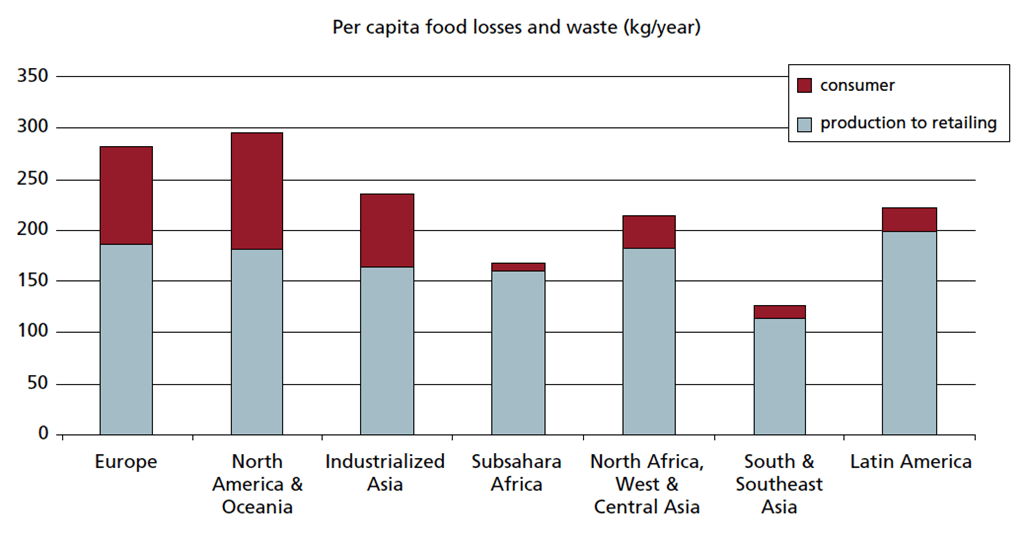
Food waste is a complex social, economic and environmental problem that is having an increasingly negative impact on our world.

wastegraph

There’s no doubt that when it comes to food production, Australia truly is the lucky country. We live in a plentiful country, with some of the world’s most abundant fresh produce and skilful, efficient farmers. Each year, Australia produces enough fresh food to feed 60 million people – that’s nearly enough to feed the nation 3 times over.1
However, recent figures suggest that 4 million tonnes of food is wasted every year in Australia.

food_waste

Of this, 1.38 million tonnes is business food waste and 2.6 million tonnes is household food waste. 2

waste

This surplus food could feed millions of Australians every day. Food gets wasted because we buy more than we need; we cook more than we need; and due to demanding quality standards a lot of produce is discarded because of appearance, despite the nutritional quality still being very good. These food waste facts are startling alone, but when coupled with the fact that 1.2 million Australians do not have access to a safe and nutritious food supply, the situation is staggering.

Many of us eat well and enjoy a varied diet, so it seems strange to be discussing food shortages for Australians; however, for many, access to food is a critical problem. Each year two million Australians will rely on food relief and around half of them will be children who often go to school without breakfast or to bed without dinner. This is where Foodbank, the largest hunger relief organisation in Australia, comes into the equation. Foodbank is a not-for-profit, nondenominational organisation that seeks and distributes food and grocery industry donations to welfare agencies to feed the hungry around the country. The food goes to hostels, shelters, drop-in centres, school breakfast programs, home hampers and emergency relief packages for people in need. Last year alone it redistributed enough food for 28 million meals.

I became involved with Foodbank in 2009 taking up the role of CEO, following retirement from the food manufacturing industry three years earlier. I enjoyed entering the workforce again, and in particular working in the charity sector. Foodbank was initially formed to redistribute wasted food products from Australian food manufacturing and retailing sectors. However, recently the focus has moved to the farming industry.

Foodbank’s Waste Not Want Not program is a unique project that delivers otherwise wasted produce from the Riverina farming community to the tables of hungry families throughout NSW and the ACT. Since the program began in 2011, over 400 tonnes of produce from the Riverina district has been donated. There are plans to roll out the program in many more areas in NSW by 2013. Farmers, including small producers, can donate their fresh fruit and vegetables products that are in excess to demand or not quite up to quality standards, as they are still nutritious and very desirable to feed needy people. Our most common donations from farmers include oranges, pumpkins, onions, potatoes and grain.

There is still a long way to go to achieve an Australia without hunger, but we, as an agricultural community, can play a part to reduce the waste and hunger that exists.

food-waste-hierarchyHeria

Waste Food Hierarchy

This is a very wicked problem that each and everyone of us has an opportunity to make a difference

For more information on Foodbank and how you can become involved, visit www.foodbank.org.au/

1 This article first appeared in RAS Times July 2012.

2 Australia and Food Security in a Changing World. Report of the Prime
Minister’s Science, Engineering and Innovation Council (PMSEIC)
Expert Working Group, 2010.

Walk a mile in my Jeans

Today’s guest post is by Angela Bradburn. Angela is a Policy Officer at Cotton Australiaand recently visited Art4agriculture headquarters at Jamberoo where she go up close and personal with some of the cows.

The colourful ones

IMG_3628

and the more traditional variety

IMG_3615

and the Archies at Sydney Show

At Sydney Royal with the Archies

Cotton Australia is the peak industry body for Australia’s cotton growing industry and a proud supporting partner of two of Art4agriculture’s signature programs The Archibull Prize and the Young Farming Champions program

Angela is one of a growing cohort of young people from non farming backgrounds going places fast in agriculture

In her role at Cotton Australia, Angela contributes to policy formulation and advocacy as well as acting as a reference point for industry organisations, government and other stakeholder groups on key policy and research issues. Key policy issues she is working on include climate change and carbon faming policies, education, labour and workforce issues. She also works with representative grower panels to provide research and development direction to cotton industry.

Here is Angela’s story ………

IMG_3598

I didn’t grow up on a farm, and have mostly lived in metropolitan areas all my life, but I am very proud to be working in agriculture, and currently for the cotton industry which is providing me with so many opportunities to grow and achieve.

I hope by sharing my story and my career path and experiences I can help to convey that there are exciting careers in agriculture aplenty.

I graduated with a Bachelor of Science in Agriculture at University of Sydney in 2004, and have worked for the last seven years in agriculture and natural resource management policy and programs, across government, in private consulting and now industry. I have  had many great opportunities, colleagues and mentors and challenging and interesting work environments along the way.

I’ve been based on Sydney and Canberra for most of my career, but thankfully with very strong grass roots ties. I’ve spent lots of time in contrasting environments – on the farm and in rural and regional Australia as well as in the board room and corridors of Parliament House.

The thing is my career could have gone many different ways, and there was no lack of choice – once I got into the right networks.

Angela and Scott 3

Angela with husband Scott enjoy the view at Art4agriculture HQ

People are often curious about why I chose to do agriculture. At school I liked science, plants and animals and was also interested in human health. Looking back, agriculture is perfect for this as it touches on all of these things. The interconnectedness of environment, agriculture, food and health is what farming systems are all about!

I spent some time living on a hobby farm in Kangaroo Valley – this definitely sparked an interest. I also ended up doing agriculture as an elective at school and our school had a farm, which was a lot of fun.

I thoroughly enjoyed studying agriculture at the University of Sydney, and was very glad I fell into it. The degree had a strong theoretical science base but involved practical experience on-farm and in agricultural businesses across many industries – an important mix from my perspective. We were a tight knit group that went through, and many of us are still friends and keep in touch. Even just looking at my class of 2004 paints a fascinating and impressive picture of the array of career opportunities in agriculture.

During my time at university I had great opportunities provided to me by the cotton industry. I managed to secure an undergraduate scholarship provided by the Cotton CRC, to support me through my last two years, and in addition I undertook a Summer Scholarship– also an initiative run by the Cotton CRC where you work on a small research project with industry researchers.

cotton_growing

I had a great time working on this based in Narrabri at the Australian Cotton Research Institute. This time in a rural community and working in the industry and its research community definitely built my appreciation and an affinity for the industry. The Summer Scholarship program is a highly successful model and I think it’s very important to provide these sorts of pathways for young people to help them in making career choices (it’s great to see other initiatives out there such as the Horizon Scholarship ). It’s wonderful be back in the industry that gave me so many opportunities during my studies and to be interacting with a lot of the same people that I did during my uni years.

After graduating I was lucky enough to secure a position within the Department of Agriculture, Fisheries and Forestry Graduate Program. Looking back, this was a really big foot in the door and a good place to start a career. This is a structured program where we rotated through areas of government and received training, leadership and capacity building opportunities. I worked in policy and technical roles across Biosecurity Australia (BA), Australian Quarantine and Inspection Service and the Rural Policy and Innovation Division.

Picture 061

From here I worked for four years as a consultant, for a company called Hassall & Associates (now GHD). Our team provided advice to government and industry to help improve the management of natural resources; effectiveness of industry and government programs; and sustainability and competitiveness of rural and regional Australia.

Now, working at Cotton Australia I continue to be excited by agriculture’s bright future, and the passionate, bright and resilient people that make up the industry.

Sophie Davidson & Angela Bradburn

Angela with Sophie Davidson ( Education Officer for Cotton Australia)

One of the things I enjoy about my current role is that working for an industry body, you have a unique opportunity to work with the other representative groups to present a unified voice for agriculture more broadly. Cotton Australia is a member of other larger groups (such as the National Farmer Federation), and its rewarding working side by side with our colleagues, sharing our experiences and striving for positive change. Piarn Masterclass 2

The cotton industry itself is comprised of very inspiring people – lots of young industry leaders, women and generally innovative and passionate business people.

“Did you know that the average of farmer in the cotton industry is 39 and it is estimated that in Australia 40% of the farms have women as partners in family farms?. If you didn’t know that I bet you know Australia produces the best cotton in the world and we clothe 500 million people.” 

One of the highlights  of my role this year was undertaking a PIARN Master Class*.

Piarn Masterclass

The Inaugural PIARN Master Class with Professor Snow Barlow

The ‘Master Class’ program has been developed and is funded by the Primary Industries Adaptation Research Network (PIARN), out of the University of Melbourne.  Run as a short, intensive program, the initiative aims to connect future research, policy makers and industry leaders with on-farm activity so that primary industries research and development can be more relevant and effective, particularly in managing key climate challenges.

I joined a group of 20 from across different agricultural industries, to take part in three modules held in different locations across rural and regional Australia over late 2011/early 2012.  The program involved farm and site visits, interactive workshops and open forums with producers, leading researchers, policy makers and key industry figures.

The Master Class program provided an opportunity to enhance and build valuable knowledge and networks with policy makers, other industries and researchers.

As well as providing a chance to observe in the field how different farming groups are successfully applying knowledge, the interactive nature of the program means that I will also get to contribute a ‘cotton industry perspective’.

I enjoy remaining connected to both my industry and across agriculture at all levels – policy makers, industry and farmers. Social media is excellent for that and I invite you to follow me on twitter @angelajbradburn

I also value being active in professional associations. In Sydney there is actually a very vibrant network of people who work in agriculture and agribusiness. A lot of us come together as part of the group Farm Writers,which holds events, brings us key speakers and provide a collective forum.  Agribuzz for example is a smart-casual event  that facilitates professional networking and provides professional development opportunities. Over drinks and canapés, our members and friends exchange business intelligence and views, enjoy brief presentations from key note speakers and take the chance to meet agribusiness’s leaders and leaders-in–the-making.

A career in agriculture – give it serious thought.  I did and I have never look back

By the way check this out if you want to know what it takes to Grow a pair of jeans

*Presentations made by a number of invited experts to the PIARN Master class are available at www.piarn.org.au/events/piarn-master-class/ACT-presentations.

Conversations of Change

Today my post is going to feature an amazing young woman who is doing agriculture #soproud (excuse the hash tag its a tribute to twitter which has introduced me to whole new cohort of great thinkers that surround and support agriculture right across the nation).

Hello world meet Stephanie Tarlinton

Steph and her parents

Stephanie with her #soproud parents at the recent Dairy Research Foundation Symposium where the audience voted her their favourite speaker.

Today I will be sharing that speech with you but you had to be in the room to understand how powerful it was and wow it was a powerful performance.

Art4agriculuture is also #soproud of Stephanie Tarlinton. She is a graduate from our Young Farming Champions program in 2011 and now a Young Farming Champions’ Ambassador

I first saw Stephanie in a photo and I saw something special and the search began to find out who that girl was.

A little bit of background. In 2004 I was given the task by the RAS of NSW Cattle Council to come up with some ideas to reinvigorate the dairy cattle events at the Sydney Royal Easter Show and if I was going to pull that off successfully I needed to do some serious sponsorship seeking. The obvious first choice here was Semex who are a major sponsor of dairy cattle shows right across the world. So I arranged a meeting with Jim Conroy who heads up Semex Australia. Now Jim is a pretty special man himself and is very committed to investing in youth in the dairy industry.

Jim was on board but it came with one condition and oh boy did that turn out to be an Everest. Jim wanted the Dairy Youth Challenge event to be reinstated onto the dairy cattle calendar at the Sydney Royal Easter show. At the time I had no idea why this event was no longer running but when I told my husband Michael he said “only a mad person would take on that task”. As it turned out adult egos and personalities and politics had shut this event down and it was the Holstein Association of NSW I had to take on and nobody in their right mind did that in those days. Pleased to say those days are well and truly in the past.

So I went back to Jim with my problem and he said Lynne “this time round young people are going to run this event” and he gave me the name of a young woman who equally believes in her peers and she attacked it with gusto with me dodging the slings and arrows.  Anyway we pulled it off. Young people run it today and wow what an event they have turned it into.

6 Youth Challenge Winners NSW Semex team with Dr Neil Moss of Cows r US

This is a picture of the winners of the re-invented event in 2005 and that is Stephanie Tarlinton in the front row. BTW The young man beside Steph in the front row is Mr Cheese from MKR 2014

As it turned out it was to be six years before I met Stephanie at an RAS of NSW Council dinner when she was runner up in the 2011 RAS of NSW Royal Easter Show Showgirl Competition and I asked some-one to introduce us. I was fascinated by everything about her. It was quite obvious that this was a superstar waiting to happen. I invited her to join the inaugural 2011 Young Farming Champions program and was thrilled when she accepted.

So enough about the background this is what she  had to say last week

Slide1

Today I’d like to have a conversation with you,

But firstly so you know who you’re talking to, I’ll tell you a little about myself

I am

  • Firstly a proud dairy farmers daughter
  • The 2011 Land Sydney Royal Showgirl Runner Up
  • An Art4Agriculture Young Farming Champion
  • A National Junior Dairy Judging Final winner
  • A Woolworths Agricultural Business Scholar
  • A Royal Agricultural Society of NSW Rural Achiever
  • A NSW Holstein Youth Exchange Awardee

And a young women who has a degree in Agricultural Business Management, loves to travel and feels just as comfortable in a pair of high heels as I do in my gumboots

My story started growing up on my family’s dairy farm which is located on the far south coast of NSW just outside of the township, Cobargo. My family has a long association with the region and in particular the dairy industry.

I have the deepest respect for the humble dairy cow which has provided for my family and wider community over the last 148 years we have been dairying.

So you ask with five generations of dairy farmers behind me what is it exactly that I am going to talk to you about.

No it’s not the quickest way to move a strip graze fence nor is it the best way to dry out the inside of your gumboot when you misjudge the depth of the creek (however Mum’s good hair dryer can perform this task if she isn’t home)

Slide2

In fact the reason I am here today is to share my experiences of having conversations of change;

Conversations that inspire & engage.

Conversations which have the ability to empower another individual by sharing knowledge and experience.

Such conversations we all have the capacity to have as a way of connecting with those in the community who have not experienced a business/way of life, which is common to us all in room, dairying.

I’m referring to what is more commonly known as a way to help bridge the rural – urban divide.

The Bridge has been built however we need to open the pathway for consumers on either side to be able to connect with those involved in producing our food and fibre products.

With a considerable amount of Australia’s population living in urban centres, those classified as rural including the country’s farmers have an important role to play in reducing the separation between communities.

Engaging in a conversation with someone who has little knowledge of how their food moves from the farm gate to their plate has the potential to give them insights into the real story of modern agriculture.

Connecting with consumers on shared values increases the possibility of forming trust in farming and those whom participate in agricultural business.

Sharing personal stories allows consumers to gain insight and confidence in farming systems, ultimately building connections and breaking down barriers in society which further decreases the divide.

Members from either side of the divide consume food in order to survive and this is a fundamental feature of unity and mutual dependency. A simple discussion on the origin of a food product has the potential for rural person A to connect with urban person B to produce an outcome of greater understanding C.

A + B = C highlights the impact a single conversation can have if society will allow itself the simple pleasure to connect and challenge perceptions.

To quote Ghandi, “be the change you want to see in the world” reinforces the challenge that in order to create ways in which to build relations between the two sectors of society one must accept their role and be prepared to create opportunities for conversation.

For the agricultural sector to develop positive images and perceptions of farming practices and lifestyle, individuals who align themselves with this segment must be prepared to participate in the dialogue.

This is something that after hearing on numerous occasions the comment “oh you don’t look like a farm girl” I regularly seek out opportunities to participate in the dialogue others may see as a waste of time. As the quote behind me states I am the being the change I would like to see and that is having a greater number of consumers with an understanding of just who is putting the milk in their latte and the process it took to get it from the cow to the city cafe.

Slide3

One opportunity I recently had which allowed me to participate in conversations with next generation of consumers was through the Art4Agriculture Archibull Prize program as a Young Farming Champion. In September last year I made my way to a primary and then to a secondary school in Sydney which saw me become their face of farming.

A face which they were not expecting which was clearly indicated to me “oh so YOUR the farmer” with an intrigued look up and down at my business suit and heels, with a laptop and mobile phone in hand.

I see dairy farmers as business people who work in the food supply sector and although we spend time in gumboots they are what I call “tools of the trade” much like my heels I guess!

I took this role on as it allowed me to challenge the stereotype of farmers which is so often poorly portrayed in the media, and provided me with an opportunity to share my experience of growing up on the dairy with children who do not have such a luxury and to share the great story that is dairy.

I would now like to share with you one tool I used which has allowed me to engage in conversations;

This is a conversation I have not only shared with you here today and at my schools last year but it has also been shared with the rest of the world via YouTube, In fact my video has been viewed by over 1500 hundred people, an audience I would have not been able to reach with my messages if it had not been for my desire to connect with others in the community who have been labelled on the urban side of the divide.

I believe that challenging stereotypes through highlighting our connections has the ability to show that as people we both have a mutual dependency on food and therefore on one another as a producer and a consumer

I am proud to come from a dairy farm, to be a small town girl, a rural consumer and I see this as one of my greatest assets, I have firsthand knowledge and experiences of food production and therefore I have something to share through conversation with those whom are classed as being from the bright lights of the city.

Slide5

One girl who calls the bright lights of Sydney home is Year 7 student Sophia, standing second from the left in this photograph. I would now like to take a moment to read you an email I received from this young girl after being to her school

Dear Stephanie,

My name is Sophia and I met you when you visited our school. I am writing to you to tell you how inspiring and amazing your visit was.

My sister Olivia and I both attended your visit and it truly was a life changing experience. As we both live in a very suburban area we don’t get to see a lot of Australian Farmers. What was so incredible about your visit was that you taught our school that farmers are real people too. Your visit and video showed us just how important Australian Farmers are and just how much farmers are like us.

So I am writing to say Thank you. My family and I are originally from NZ however we moved here 5 years ago. I feel like I now understand that the foundation of Australia is made up of Farmers. You have really changed the way I think about farmers and I will now make it my mission to help spread the word, “Farmers are real people too” oh and that “farm girls love their shoes”

Regards Sophia

After reading this email I was touched at how my simple video which showed nothing more than my life on the farm, our girls aka the cows, a few pairs of shoes and some creative dance moves had the ability to inspire a young woman. I was touched at the response I received as for me I was just having a conversation about the everyday things that form life on our farm however for this particular girl my ordinary wasn’t so ordinary.

Slide6

I chose to share Sophia’s story with you as I believe it is an example of how it only takes a small conversation or connection to create big outcomes. For me knowing I had planted a seed in one person’s mind regarding the way she thought about farmers provided me with the greatest sense of satisfaction and determination to then tell others about my story and encourage them to tell theirs.

In my dealings with people in the agriculture sector I have often found farmers to be very humble people, my parents are a great example of this, however I challenge you all to be inspired by the words of William James –

“Act as if what you do makes a difference. It does”

I believe as dairy farmers we make a difference, everyday. Everyday there is fresh, safe healthy dairy products available to consumers which have all originated from the only true white gold, milk. It does make a difference to people’s lives that is because the nation’s dairy farmers got out of bed this morning that have food on their table, jobs to go to, communities to live in, someone to call a neighbour, a friend.

I am confident there are many other ways which you all make a positive difference to someone’s life simply due to your actions as a dairy Farmer.

As farmers if we would like others in the community to acknowledge this difference we make to their lives we must be prepared to share with them, to build trust by finding common values and to firstly acknowledge and be proud of the role we play.

I see no easier way to do this then by having a chat with someone. Whether its a taxi driver, the person next to you on the plane, the person at the supermarket checkout, your hairdresser, or your child’s teacher. Share with them your story, challenge the stereotype, leave them with notion that today they met someone who is PROUD to be a dairy farmer or working in the dairy industry.

Conversations provide a key to reducing the disconnect between the farmers who grow the food and the people who buy and consume it. By acquiring education from individuals like ourselves who have firsthand knowledge in agricultural fields, it will enable those divided by urban boundaries to have informed opinions and increased understandings of what it is exactly that you do.

Actively participating in the conversations is essential for progress to be made in reducing the disparity of knowledge because if we don’t take the initiative to stand up and tell our own story someone else will. And I personally know I’d rather tell my side of the story then have someone with extreme views or uninformed opinions reaching the consumer of a product I’m proud to say I produce.

Slide7

So I would now like to ask those in the audience who are proud to dairy to raise your hand…

Congratulations! I too, am proud to dairy, proud to be a part of a great industry and proud to have such a long family history associated with dairying.

I would now like to ask you all to have a conversation of change, to share your experience and wisdom

And remember every individual has the power to share knowledge regardless of which side of the classroom divide, they take a seat during story telling.

So I challenge you all to be the change we need to see to bridge the divide,

To seek opportunity to engage and educate,

Act as if what you do makes a difference as it does to the consumers of Australia

And finally

Be proud to Dairy, Always.

So in 140 characters “Stephanie stepped out in her black business shoes and her pink lipstick and wowed them with her #proud2dairy message” and she bought many in the audience to tears including me.

Farm Girls Wear Shoes too

Those shoes

This wont be the last time you will hear from Stephanie Tarlinton.

However shortly she is leaving our shores to spend some time with her good friend Leona Dargis in Canada and wont that be a daunting partnership. We hope to share some of this journey with you over the next two years

leona dargis-3

Young Farming Champions hit the road running

The 2012 Young Farming Champions spent last weekend at Clover Hill Dairies  in Jamberoo undergoing rigorous training to ensure that their school partnerships achieve the best outcomes for the student and farmer participants. They received coaching on how to craft a message so that it is remembered, how to connect with the audience, how to cope with nerves, to making a multimedia presentation, and how to prepare for and answer difficult questions.

This year the Art4agriculture Young Farming Champions will represent the Cattle and Sheep, Cotton, Wool and Dairy industries courtesy of Target 100, Cotton Australia, Australian Wool Innovation and Pauls Milk 

IMG_3021

The workshop was conducted by the delightful genius that is Ann Burbrook

The YFC’s enjoyed hearing anecdotes from both previous YFCs, last year’s school students and their teachers showing what an impact this program can have. From raising awareness of food and fibre production and consumption, to increasing the number of students studying agriculture, as well as challenging stereotypes and setting students on a new career path into the agrifood sector.

Lunch of Champions

Table of champions

Steph T

Stephanie Tarlinton YFC alumni and dairy ambassador was on hand to share her 2011 YFC journey with the inductees.  Stephanie’s  “Farm Girls Wear Shoes too” video was quite a hit with the students and the new YFC’s

YFC workshop

Stephanie Tarlinton presents to 2012 YFC’s

Sammi

There were food for thought moments for Wool YFC Sammi Townsend

Jess M 3

Pensive moments for Dairy YFC Jess Monteith

“ Wow what a wonderful weekend it was. I was able to learn about other key rural industries to broaden my knowledge and in a sense make me even more passionate about Australian Agriculture and the YFC cause!” said Jess

IMG_2981

Plenty of light moments for Beef YFC Madie Hamilton

Beef Young Farming Champion, Madie Hamilton from Mudgee in NSW was exhausted, but excited at the end of the workshop. “The YFC program is a way for me to give back to an industry that has given me so much. I hope I can entice more people to work in any part of the agricultural industry”

IMG_3011

Beef YFC and Ask an Aussie Farmer creator Kylie Stretton enjoyed her first trip to Sydney.

IMG_3099

Cotton YFC Katie Broughton is doing a PhD researching the potential effects of climate change on the Australian cotton industry. Katie is proud her jeans come from the highest quality cotton in the world and is keen to make it is as easy as possible for our Aussie farmers to keep producing it sustainably    

“It is incredible to work with such a diverse group of young Australians promoting agriculture. The enthusiasm within the group is infectious, and I am excited to be part of a program that is linking people in rural and urban communities.” said Katie

IMG_2999 

Our young male dairy YFC Tom Pearce handled the all female company extremely well. He tells me growing up with 3 sisters has given him plenty of insights into the female psyche.But he admits he is looking forward to Sam Adams and Billy Browning joining him next time.

“I’m looking forward to presenting my story to a classroom full of interested young adults and hope to inspire a few to seek opportunities outside of the city.” said Tom

IMG_3113

The launch of this fantastic new resource from Cotton Australia

“How to grow a pair of jeans”

IMG_3050

Katie Broughton and Tamsin Quirk Cotton YFC’s with Sophie Davidson from Cotton Australia

“The weekend confirmed for all participants, that they do have a unique story, that they do have something important to say and that they are in a unique position to say it! These young people already have a flame, they already have a voice and they already have a purpose. This weekend gave them the tools they need to realise that purpose”. said Sophie Davidson from Cotton Australia who joined the YFC’s this weekend

IMG_3068

Beef YFC’s Madie Hamilton, Hayley Piggott and Kylie Stretton (front)

IMG_3080

Dairy YFC’s Jess Monteith and Tom Pearce

IMG_3087

Wool YFC’s Lauren Crothers, Sammi Townsend and Wool YFC Ambassador Kathleen Allan

Wool Young Farming Champion, Lauren Crothers from Dirranbandi in Queensland said the weekend was one of the most enjoyable she has had this year. “It provided the opportunity to meet with like minded individuals who share a common interest, inspiring the people of Australia and encouraging them to be part of the amazing Agricultural Industry.”

The Young Farming Champions are now working on their videos and industry presentations prior to meeting again in August to review their progress. They will visit their allocated schools in metropolitan Sydney and Brisbane in September this year.

The 2012 Young Farming Champions are:

  • Kylie Stretton, Charters Towers, QLD – Beef Industry
  • Hayley Piggott, Rolleston, QLD – Beef Industry
  • Madeleine Hamilton, Sydney, NSW – Beef & Sheep Industry
  • Billy Browning, Narromine, NSW – Cotton Industry
  • Katie Broughton, Narrabri, NSW – Cotton Industry
  • Tamsin Quirk, Moree, NSW – Cotton Industry
  • Jessica Monteith, Berry, NSW – Dairy Industry
  • Tom Pearce, Bega, NSW – Dairy Industry
  • Lauren Crothers, Dirranbandi, QLD – Wool Industry
  • Kathleen Allan, Yass, NSW – Wool Industry
  • Sammi Townsend, Lyndhurst, NSW – Wool Industry
  • Samuel Adams, Armidale, NSW – Wool Industry
  • Bronwyn Roberts, Emerald QLD – Natural Resource Management /Beef
  • Stephanie Fowler, Richmond NSW – Beef

Our 2012 Art4agriculture Ambassadors are

  • Catherine Marriott, Perth, WA – Beef Industry
  • Melissa Henry, Boorowa, NSW – Wool Industry
  • Kathleen Allan, Yass, NSW – Wool Industry

We have had lots of superb YFC applicants this year and hope to invite some of them to join the program next year. If your industry would like to invest in its young people and sponsor a Young Farming Champion send me an email I would love to talk to you lynnestrong@art4agriculture.com.au 

IMG_3093

NSW – the faces of the future

Give me a home where the buffalo roam says Jo Roberston

Today’s guest blog comes from Jo Roberston who you guessed it grazes buffalo on her farm. I have been looking forward to hearing Jo’s story because I know nothing about buffalo. So thank you very much Jo for sharing your story

clip_image002

A bit about me

Hi, my name is Joanna Robertson. I have completed my fourth and final year of a Bachelor of Livestock Science at the University of New England in Armidale at the end of 2011. Since finishing uni I have been working in Armidale for the New South Wales Department of Primary Industries as a Graduate Officer, currently in extension (beef cattle, sheep and agronomy).

I grew up on a mixed enterprise property at Tooraweenah in Central West New South Wales with numerous different crops and livestock.

Jo and Gucci 1991

Me and Gucci

The livestock included sheep, cattle and water buffalo, definitely not your every day farm animal. My parents had both been in the Northern Territory where they had worked with water buffalo, of the Swamp variety, on improving meat quality and domestication practices. Our  foundation herd of buffalo came from the Townsville research station in QLD. Other animals were bought from various locations around the eastern states, some in SA, including Dubbo Western Plains Zoo. At our peak we had around 100 breeding cows plus their offspring (steers and heifers).

clip_image020

Mum, Dad and myself (in the middle) with some of the original ‘girls’ that were brought down from the Townsville research station.

When they returned to “Tara” they brought what they knew with them as well as maintaining also sheep, cattle and crop enterprises. So as a kid I was lucky enough to work with all these animals and take care of the inevitable poddys 1 that came with having livestock. We also looked after some of the local wildlife which led to numerous pet kangaroos, birds (including an owl), reptiles and even the occasional echidna.

Picture of me and a joey

I attended the local primary school in Tooraweenah, a small school with a very big heart. Tooraweenah Primary School has been dubbed the ‘school with a view’ because it has the Warrumbungle mountains as its backdrop.

After finishing at Tooraweenah I then attended Kinross Wolaroi School in Orange as a boarder. While at high school I took up showing cattle with an Australian Lowline breeder, Tammy Breuer. Tammy took me under her wing after I had a couple of bad experiences with bigger breeds of cattle and taught me everything I know today. Tammy took me to all the  regional shows that my school commitments would allow me to attend. I also accompanied Tammy to Sydney, Canberra, Brisbane and Melbourne royal shows. In 2004 my parents encouraged me to break in a steer and prepare it for the Dubbo national steer show. Murray, or as he was more affectionately known, Muzza, was a Murray Grey x Limousin steer. While I still had a lot to learn about the nutrition side of preparing and animal to show I had learnt a lot about grooming and breaking in animals. Tammy was there to help me every step of the way and provided support and guidance where needed. Muzza lead me to Grand Champion parade that year which was an amazing achievement.

clip_image004

Muzza and Jo at the Dubbo Steer Show 2004

After regaining my confidence with cattle I went on to work for numerous other studs with countless different breeds including Herefords, Angus, Brangus, Droughtmaster, Brahman, Limousin, and Charolais just to name a few. Tammy has been an huge inspiration and influence in my life. She passed away early last year and I miss her immensely.

clip_image006

Tammy and “the girls” at Sydney Royal Show 2005 with the senior champion bull and grand champion Lowline.

In 2007 I took a year off between finishing high school and starting university. I spent a few months up in the Northern Territory on a small  by territory standards) family owned station, Sunday Creek. Sunday Creek station, located 3 hours south of Katherine, is owned and operated by Tom and Bev Stockwell along with their 3 kids Peta, Brian and Claire. While I was there they also had a French exchange student and a Canadian whom both came out to experience outback Australia. This made for some very interesting days in the saddle and in the yards. All mustering was done on horse back, which for me was both a challenge and great fun. Growing up I had always wanted a horse but hadn’t been able to have one and had only ridden friend’s horses. Working with horses everyday was like a dream come true for me. The first horse I was put on was a bombproof 17 hand ( 5 feet 8 inches tall at the withers )  horse named Hercules. While he was a wonderful, quiet horse though I constantly found myself looking for termite mounds to stand on just to mount him! I rode a couple of different horses while I was there which was great and I learnt a lot about the different personalities of horses.

clip_image008
Me and one of the many station horses on Sunday Creek

For our weekends off we occasionally went to the local pub which was only half an hour away. The Daly Waters pub was always an extremely busy place and popular tourist destination, especially during the dry season as it was a popular tourist destination. I also attended the Daly Waters camp draft which was a great day out for the whole family. clip_image010

Me on Maddie, one of the kids ponies, at the Daly Waters Camp draft

One of my main responsibilities while at Sunday Creek was to look after the ever growing number of poddy calves. This included both the bottle fed poddys and pellet fed poddys The pellets are high in both energy and protein and this gives the poddy calves the necessary boost to keep them healthy and growing well clip_image012

Friday, my first poddy calf of the season He was a Brahman x Droughtmaster. I managed to teach him to shake hands for his milk every day. I was sad to leave him behind.

Working in the Northern Territory opened my eyes up to just how different extensive cattle production is compared to what is almost considered intensive cattle production in the south eastern states. On Sunday Creek we did lick runs every week which involved putting out a loose lick supplement, similar to lick blocks more commonly used in the southern states. These supplements are used all year round. There are 2 main supplement types; One for the wet season and one for the dry season. These two licks are also formulated for weaners, as they can’t go straight onto a full grown cattle lick. The licks are formulated to suit the age and needs of the animals being fed as well as the different times of the year.

clip_image014
Cows tucking into loose lick at Sunday Creek (the black thing hanging down is a scratching bar that is treated with chemical for the animals to rub on to help protect them from buffalo fly, a prevalent pest in the NT)

Me and my water buffalo!

clip_image016

Growing up with water buffalo enabled me to see a side of livestock production that most people don’t get to see. It also enabled me to see the joys and challenges of working in a new and emerging industry. Many of my earliest memories are of watching my dad work the buffalo through the yards: marking, weaning, pregnancy testing and sending them off for sale. Many people believe that buffalo are hard to handle but if they are handled often this is not the case. Like most livestock, the more you handle them, the quieter they are.

I would also accompany my parents to the abattoirs so I was exposed to the paddock to plate concept from an early age and it has given me a greater appreciation of the critical control points that exist between the yards at home and the knocking box of the abattoir. Meat quality has undergone a lot of research in most meat products. The buffalo industry came up with TenderBuff branding in the 1980s to ensure meat that was to be sold was of the highest quality. Its similar to the MSA grading system used for beef.

clip_image018

Once I started university in 2008 I took more of an interest in the buffalo industry from a research and promotion perspective looking at increasing awareness of buffalo and their products in Australia. In December 2008 I accompanied my Dad and Barry Lemcke (principle buffalo research scientist) to Cairns in northern Queensland to have a look at a prospective buffalo project to be funded by the Rural Industries Research and Development Corporation (RIRDC). While we were up there we visited the Millaa Millaa buffalo dairy owned by Mitch Humphries up on the Atherton Tablelands.

clip_image022

Riverine buffalo cows in the holding yard waiting patiently to be milked.

In 2009 I travelled up to Darwin to spend 4 weeks during semester break working with Barry Lemcke, buffalo and cattle research officer NT Department of Resources. While I was up there I was lucky enough to work on both cattle and buffalo projects.

clip_image024

7/8 Riverine x 1/8 swamp buffalo cows with calves at foot. Beatrice Hill research station NT.

During my time on the Beatrice Hill Research Station, west of Humpty Doo, one of the OUTBACK magazines free lance journalists turned up to do a story on the buffalo industry. I was lucky enough to not only be quoted in the article but to also get my photo in there. Talk about being in the right place at the right time! It is an excellent article and I encourage any who can find a copy to have a read as it gives a great history of buffalo in Australia and where the industry is now heading.

clip_image026

OUTBack magazine cover of the Buffalo Industry feature story. Issue 67 Oct/Nov 2009

Also in 2009 I attended the inaugural New Rural Industries Australia (NRIA) conference held on the Gold Coast, QLD as a representative for the NSW buffalo Industry. It was a very interesting conference with many varied industries being represented. Industries included: crocodiles, olives, truffles, camels and native flowers just to name a few. It was an excellent opportunity for some of these smaller industries to get together, network and learn from each others opportunities and mistakes.

clip_image028

NRIA conference 2010, Jo holding a crocodile from Karoona Crocodile farm QLD.

I was supported by other buffalo producers from QLD, Margret Thompson and Mitch Humphries, at the conference who supplied some of the cheese products that are made from buffalo milk (mozzarella and feta). Buffalo cheese was also on the menu of the conference as the chef tried to use every product that was being promoted at the conference in the menu over the 2 days. It made for some very interesting meals!

Since 2009 I have been looking at increasing my own herd with the addition of a bull. Unfortunately he was not as fertile as we had hope and has only produced one calf over the past 3 years. However, I must take into account the differences in gestation between buffalo and cattle. The gestation period of a buffalo is actually 10.5 months where as cattle are only 9. Buffalo calves also stay with their mothers for a lot longer than cattle. Buffalo calves are weaned when they are 12 months or older where as beef cattle calves can be weaned much earlier. For now my herd remains small and is just for my own enjoyment but hopefully, sometime in the not too distant future, I will be able to produce enough buffalo meat to supply a market and I have done some extensive market research. Hopefully a saltbush fed buffalo product will be on the menu at the farmers markets near you soon!

clip_image030

Kyle, my first swamp buffalo bull

clip_image032

Kyle’s first calf, a little heifer calf, called Kylie (she is about 6 months old here)

Unfortunately, due to old age, Kyle passed away about a month ago and we now have a new bull calf (around 2 years old), yet to be named. He came from a buffalo producer in SA. He was delivered on ANZAC day so we thought a name relating to ANZAC day would be a good one. Any ideas?

clip_image034

My new little swamp buffalo bull

A little bit about buffalos

There are currently two main types of buffalo in Australia the Swamp buffalo and Riverine buffalo. Swamp buffalo are the buffalo commonly found in the Northern Territory. They have much bigger, sweeping horns, lighter grey colour and less hair. Where as Riverine buffalo have short, tightly curled horns, a lot more hair and are also a lot fatter than the Swamp buffalo.

Buffalo have the same names as cattle; females are cows or heifers (if they haven’t had a calf yet), steers (castrated males) and bulls (intact males).

clip_image036

Swamp Buffalo- at home, New South Wales

clip_image038

Riverine Buffalo- at Beatrice Hill research station, Northern Territory

Next year (2013) I will be attending the World Buffalo Congress, which is to be held in Phuket, Thailand, as a representative for Australia. This will be an amazing experience which will allow me to network with like minded people across the globe as well as hear about some of the latest advances in buffalo research.

I could write about buffalo all day, however for now I will leave it at that and if anyone would like to know more the Australian Buffalo Industry Council website is http://buffaloaustralia.org/ it has links to all of the state bodies and information about the products produced by buffalo producers.

Farming Futures

Last year a friend of mine, Jo Newton, and myself came up with an idea of hosting a networking/socialising function to get University of New England agriculture degree related students together with agricultural industry employers. This was the start of the Farming Futures Industry Dinner. It was organised by the Rural Science Undergraduate Society (RSUS) in conjunction with Students In Free Enterprise (SIFE). We had 2 speakers, both former agriculture degree related graduates from UNE, to talk about where your degree can take you and opportunities that exist in the Agriculture sector in Australia. Our fist speaker was Dr Geoff Fox, former employee of the World Bank. He inspired everyone with the number of diverse careers he had had since he finished at UNE. Our second speaker was Troy Setter who is the current Chief Operating Officer for the Australian Agricultural Company (AACo). He highlighted the opportunities you can have in a very short period of time if you are willing to work for it. Chris Russel our master of ceremonies for the night, was a hit with everyone.

clip_image040

Farming Futures Industry Dinner organising committee with VIP guests Dr Geoff Fox, Jo Newton, Chris Russell, Troy Setter, Jo Robertson, Sarah Foster and UNE Vice Chancellor Prof Jim Barber

Overall, it was a great night with a good number of Agriculture industry employers/leaders and university students. This year the dinner will be hosted again but this time a careers fair will be held beforehand during the day. This allows the students to have a look around at what is available in a more formal setting then discuss with the employers at the dinner, in a more informal setting, the opportunities available to them. As I am no longer a student at the uni I hope to attend the dinner as a representative of the NSW DPI graduate program.

clip_image042

Jo on Merry, a poddy Riverine buffalo calf at Beatrice Hill Research Station NT.

clip_image044

Agriculture is a very diverse industry in which a large variety of jobs can be found. Anyone wanting to be involved in agriculture can be! There is a place for everyone, you don’t have to have grown up on a property to be involved or to get involved.

Any Questions?

Q. What are poddys Jo

A 1 Poddy’s are young calves that are hand raised

Meet Steph Grills proud to be continuing here family wool tradition

Today’s guest post is by Steph Grills another young Australian food and fibre producer who is very proud to say that Agriculture has been passed down over nine known generations and spans over three centuries in her family and she is very keen to carry on that tradition

The Steph Grills story …………

In the late 1600’s, John Grills and his wife Urah, moved to St. Mellion, Cornwell England, where John practiced the trade of a worsted-comber 1. Four generations later, John (IV) and his wife Rebecca, decided to emigrate to Australia, settling in Maitland, NSW where John was a soldier, stonecutter and farmer. Their son Thomas, moved to Saumarez, Armidale where he married Ellen O’Connor and selected land on the eastern fall country of the New England Tablelands in 1881. Thomas and Ellen had 11 children, who went on to have 73 grandchildren, many of whom remained on the land. This property, along with later purchases, remains in the family to this day.

Agriculture was also very prominent in my mothers’ side of the family. In 1833, in Langport, Somersetshire England, John Turner married his wife Sophia. Four children later, they decided to make the journey to Australia in 1849. Initially settling in Adelaide they followed the Gold Rush to  Victoria where they settled in Adelong in 1860. Here, John invented the first known steam crushing mill for gold. They also erected a school and were well respected in the area. The family continued the Agricultural tradition and bred cattle and sheep, as well as operating a dairy, wine and chaff making industries. One of their sons, Octavius (Doc), moved to the New England area which is where my mums’ family have remained.

After selecting the original country in 1881, a further two blocks of land were purchased over the next 40 years by Thomas and Ellen. Ellen went on to leave this land to the women of her family, until her three grandsons took it over as a partnership in 1960. The partnership was dissolved towards the end of the decade, and country was split into three separate properties. My father has gone to great lengths over his lifetime, to get back all of this country to once again make it one, and this is where I had the privilege of growing up as a seventh generation Aussie farmer. You would be quite right to say ‘it’s in my blood’.

The start of a family farm …

My grandfather took on the mammoth task of changing his block into a productive property. The 2200 ha were split into just 5 paddocks at the time, the soil had never seen superphosphate, bare ground was prominent under the heavily timbered country and rabbits were a constant problem. He set about developing the land by ringbarking trees, aerial seeding the country and also spreading super phosphate by plane.

Pa in Rungbark Trees

My Grandfather standing amongst the ringbarked trees

The country was first improved on the ground with two TE 20 Ferguson tractors, pulling 7ft gear to put down introduced grasses to improve the productivity of the country in 1954. In 1959, the country benefited from the first aerial fly out of super phosphate in bagged form, which was hand lifted into the plane in 50kg bags. The ground application of super was also put out with the improved pasture seed. In 1972, the first woolshed was built on the northern end of the property. Prior to this, sheep would need to be walked anywhere up to 15 km to the other end of the original property, which my uncle then owned following the partnership being dissolved in 1967.

img086

Original Woolshed

clip_image006


Current Woolshed (extended in late 90’s)

The original livestock were Herefords and Merinos. Market demands and trends have meant a third of the herd remains as a Hereford base, a third is aimed at the Angus premium market and the remaining third aimed at the crossbred market, where high growth rates can be obtained through hybrid vigour. Australian beef is part of the worlds’ highest quality meat, known for its consistency and being safe and disease-free.

In 1964, while already having a Merino flock, the first ewes were purchased from the Fulloons, which are now the sort after ‘Cressbrook’ bloodlines. Fine merino wool and mutton production is still an important part of the production on the property. In the mid – late ‘70s, fat lamb production was introduced, however, their feed requirements were found to be too high for return and they were phased out in the early 1990’s. Wool continues to play an important role and is somewhat iconic on the New England tablelands.

Over the years, improved pasture management has led to a much higher yields and efficiency per hectare. Originally we grew permanent pastures of cocksfoot, fescues, ryegrass and clovers.  These days, a high-performance short-term pasture is sown down which includes  high performance ryegrasses and herb species such as plantain, chicory and clover to provide finishing feed for fattening cattle, before establishing a high performance permanent pasture.

clip_image008

Improved Pasture

Fertiliser usage on the property has also come a long way over the last century. In the early days, single super was a major investment, with large returns. Currently however, although still important, fertilising the country has moved along with the advancements of soil and pasture testing. The addition of lime and natural products/by-products of other industries, such as chook manure have proven to be worthwhile both in a sustainable, environmental sense and also in regard to return in improved growth of pasture. We have now adapted and are developing the country through means of biological farming; introducing ‘good-bugs’ back into the country.

Surviving three droughts over this time stands testament to those who were looking after it at the time. Future dry times are sure to return cyclically  but with the use of sustainable agriculture, increased knowledge and better management practices we are confident we will be resilient.

Like many Australian farmers our family are dedicated to undertaking weed control, pest and disease management and habitat and biodiversity enhancement.

We are testing both our soils and our pastures and creating nutrient maps so we can pinpoint exactly what the soil needs in order to remain ‘fuelled-up’ to continue being sustainably  productive.

We have fenced of our waterways and have dedicated areas put aside to increase biodiversity and provide safe habitats for native flora and fauna.

Growing up a Grills…

With such a large extended family and great community spirit, growing up here was something I’ll cherish forever. I have four sisters, three of which are married with 7 kids between them. Horses were a massive part of my childhood and provided many a great time, which still continues today.

Me with Dad on Horse

Starting early – 12 months old with my Dad

I grew up with them, not ever remembering even how I learnt to ride. My father was a keen and talented campdrafter, whilst us kids competed in ribbon days, and attended pony camp and travelled to shows all around.

Steph Grills jumping on Midsun Jamboree 1995

Pony Club in 1995

We moved back into the Polocrosse scene when I was about 10, and haven’t looked back since.

Stephanie Grills Polocrosse

Steph says catch me if you can

Cattle and sheep work was simply just a way of life. Very rarely were there ‘days off’, as there was always something that needed to be done or checked. There are many great memories growing up mustering cattle or being lucky and being ‘let into’ the big shearing shed when we were just tiny. From heading out at dusk with Dad, probably when I was meant to be having a bath and getting ready for dinner and bed, to check on a heifer calving, or to go down to give a poddy one last pat goodnight.

It’s a passion instilled as a youngster that I wouldn’t change for quids. I went off to boarding school at 11 years old and counted the hours when I would get to go home of a weekend. The school cattle team brought me some reprieve and ‘filled the gap’ a little. It was here that I had the opportunity to go on and win the National title for Beef Cattle Parader at the Hobart Show in 2002. Winning Hobart Royal

Winning at Hobart Royal 2002

It wasn’t until my final two years of school where I was able to study Agriculture and Biology, that I really found school somewhat enjoyable. So I threw myself into my studies, especially for these two units, and came out the other end of my HSC, with the award for Agriculture, Hospitality and a merit award for Biology. I was accepted early into University through the School/College Recommendation Admission Scheme. However, university wasn’t at the top of my list. I went home to work for twelve months on the farm and decided that I needed some qualifications to back me up. I completed my Certificate IV in Agriculture through a traineeship program at home. But from here I wasn’t sure what to do. I knew I wanted to follow on with Agriculture and I loved the livestock industry, so I enrolled at UNE, to study my Bachelor of Livestock Science.

Although different paths have taken me away from completing this until now, I have learnt a lot in the past few years and have made some wonderful friends across the country.

I even moved to Mungindi, NSW for 2 ½ years to become the offsider in a broadacre spraying operation. Although my family had had cattle on agistment around Moree and I had grown up with a few friends out that way, I knew very little about the cropping industry and its a time which I will cherish both for the knowledge learnt and the great friendships gained.

P9130095

Mungindi Cropping

The future of Australian Agriculture…

I believe the future for Australian agriculture will be very bright. So many people are now voicing their support for Australia’s food and fibre producers, from all different walks of lifes and as a farmer this is so rewarding to see. No longer are farmers and all those working in the industry, just sitting on the fence, just like me they are starting to share their stories with the community. I am excited to be part of an innovative industry that is leading the world in technology and adapting it on a practical level.  I’m very proud to say that Agriculture has been passed down over nine known generations and spans over three centuries just in my family. My hope is that this continues, and that the future generations can be just as proud as I am that they grow world class food and fibre. I also hope by sharing my story I can inspire other young people to follow me into an agricultural career

clip_image020

“Life on The Land – Don’t ever give up!”

1. WOOLCOMBER ( Taken from Family Tree magazine November 1996 Vol 13 no 1)

Woolcombing was part of the process of worsted manufacture. In the manufacture of woollen textiles the raw wool was carded to lay the tangled fibres into roughly parallel strands so that they could be more easily drawn out for spinning. Wool used for worsted cloth required more thorough treatment for not only had the fibres to be laid parallel to each other but unwanted short staple wool also had to be removed. This process was called combing. It was an apprenticed trade, a seven year apprenticeship being the norm in the mid 18th century with apprenticeship starting at about the age of 12 or 13.

The comb, which was like a short handled rake, had several rows of long teeth, or broitches – originally made of wood, later of metal. The broitches were heated in a charcoal fuelled comb-pot as heated combs softened the lanolin and the extra oil used which made the process easier. The wool comber would take a tress of wool, sprinkle it with oil and massage this well into the wool. He then attached a heated comb to a post or wooden framework, threw the wool over the teeth and drew it through them repeatedly, leaving a few straight strands of wool upon the comb each time. When the comb had collected all the wool the comber would place it back into the comb-pot with the wool hanging down outside to keep warm. A second hank of wool was heated in the same way. When both combs were full of the heated wool (about four ounces) the comber would sit on a low stool with a comb in each hand and comb one tress of wool into the other by inserting the teeth of one comb into the wool stuck in the other, repeating the process until the fibres were laid parallel. To complete the process the combed wool was formed into slivers, several slivers making a top, which weighed exactly a pound.  The noils or noyles ( short fibres left after combing) were unsuitable for the worsted trade so were sold to manufacturers of baize or coarse cloth.