Remembering our Soldiers

Today’s blog post come from Young Eco Champion Renae Riviere. In her day job Renae is also Regional Manager for the Illawarra and Shoalhaven Conservation Volunteers Australia network

I am confident you will enjoy this very moving account from Renae……..

I’ve never been a “list writer”, but in 2005 I decided to write a list of all of the things I wanted to achieve in my life; the only thing I ever wrote in it was “Be at Gallipoli for ANZAC Day”, then I either got bored with list writing, or totally forgot about the list altogether.

Then on my birthday in 2011, a work colleague called to ask me to be an assistant group leader on the 2012 Conservation Volunteers Gallipoli Volunteer team on ANZAC Day. Best Birthday present ever!!

clip_image002

Both of my grandfathers served in the Second World War and paying respect to our soldiers has always been important to my family. I don’t remember talking much to my Pa and Pop about the war as a kid; maybe I didn’t ask, or maybe they didn’t want to talk about it with us; I don’t really know. I do remember that I loved looking at their medals though.

In 2006 before I went to Japan I sat down with my Pop and looked through his photo albums from when he went to Japan after the bomb was dropped in Hiroshima. He looked so young in the pictures and even though the place looked so sad and demolished, he and his mates still managed to have a laugh, and they looked like they were making the locals laugh too. He said that he would be keen to hear what Hiroshima looked like now, so I told him that I’d bring home some pictures.

I was in Hiroshima on August 6th 2006 for the 61st anniversary of the bomb, but my Pop died 3 days later, so I never got to tell him about it.

clip_image004

A-Bomb Dome in Hiroshima – one of the few buildings left standing after the bomb.

clip_image006

The Children’s Memorial in Hiroshima. Below this is a huge glass room full of paper cranes.

I’ve always had an interest in the First Wold War too. I studied it in year 12 and have always made sure I have been at a dawn service for ANZAC Day and somehow after my 2 grandfathers died, I feel it is even more poignant. Hearing the Last Post gives most people goose bumps; for me it also reminds me of Pop and Pa as it was played at both of their funerals.

For 7 years the organisation I work for; Conservation Volunteers had worked in partnership with the Department of Veterans’ Affairs to take a team of volunteers from Australia and New Zealand to Gallipoli to work at the ANZAC Commemorative Service. The main role of the team is to facilitate a safe and memorable experience for the 6000 or so visitors to the site for the Dawn, Lone Pine and Chunuk Bair services. The Gallipoli Volunteer Team meet and greet people at the gates, hand out info packs and provide a valuable service to the visitors with “special needs” – those who are elderly, ill and/or with mobility issues. This was by far the most rewarding job on the roster; the pace is much slower and you can take the time to have a chat with the visitors as you are assisting them to their special seating area.

In 2012, we took a team of 4 staff and 25 volunteers over to Turkey for ANZAC Day. Our volunteers ranged in age from mid-20’s to mid-60’s and came from a range of different backgrounds; nurses, teachers, retirees and Vietnam Vets, but despite the different backgrounds, everyone bonded really quickly and by the time ANZAC Day came around we were a well-oiled machine.

clip_image008 clip_image010

The veterans in our group stand up and be recognised at the Lone Pine Service and the 2012 leadership team…I’m the short one.

We worked from about 9am on the 24th until the Dawn Service began on the 25th; when we got to stop and actually take in the experience – here we were at ANZAC Cove, watching the sun rise on April 25th! Then it was back to action stations as we assisted the special needs folk up to the Lone Pine Service, which is still very solemn, but somehow a bit more relaxed than the Dawn Service. Then it was back to our hotel for some much needed R and R.

Prior to ANZAC Day we had a week or so to really get to know the Gallipoli Peninsula; we visited cemeteries and battlegrounds, walked the ridgelines our Diggers would have walked and cruised the Agean Sea, allowing us to see the coastline as it would have been seen by the soldiers. All of these experiences were enriched by having both an Australian and a Turkish guide with us, to share both sides of the story.

Having this time to explore the land really blew my mind; I had read about how harsh the conditions were there and about how steep and unforgiving the terrain was, but not until I saw it, and walked it did I truly appreciate it.

clip_image012

 clip_image014

The Sphix and Shrapnel Valley ANZAC Cove from the Agean Sea

We’ve all heard the story of the battle at The Nek and how close the ANZAC and Turkish trenches were, but it really hits home when you stand there on the battle field and realise that it’s about the same size as a basketball court.

Before we left Australia, we were all given the name and some details of a soldier from our home town who died in battle at Gallipoli. Mine was Charles Frederick Roy Fell from Balgownie; just a suburb away from mine. He enlisted on May 15th 1915 and died on August 6th 1915. He was just 23 years old. I visited his headstone at Lone Pine and told the rest of the team about him and about the battle he died in. It made me wonder if any of his family had ever had the opportunity to do the same thing. Yesterday for Remembrance Day I went to my local War Memorial and paid my respects to him again.

clip_image016

clip_image018

Charles Fell’s Head Stone and a volunteer placing a poppy at her soldiers plaque

Whilst staying on the peninsula we also had the opportunity to visit the ancient city of Troy; another thing I would probably write on my list…if I were a list writer. It was really amazing to see an ancient history so different from our own. Then we headed into the hustle and bustle of Istanbul for a few days of mosques, shopping, spices, shoe shines, baklava, traffic and more shopping!!

This was by far the most rewarding travel experience that I have ever had and I would recommend to anyone that does get the opportunity to go to Gallipoli for ANZAC Day, don’t just go for the day. Stop for a few days and take it in; make a connection with the place that it all happened in.

Thanks Renae for sharing this moving experience with us and the Art4agriculture team  are looking forward immensely to working side by side with you in 2013 

Start some Good and Jump on board The Crossing’s Big Yellow Taxi project

I recently wrote a post about our Young Farming and Eco Champions workshop at The Crossing in September. This post shares with you more of the wonderful work they are doing and they need your help to make it happen

Jump on board The Crossing’s Big Yellow Taxi project  will help to create a song writing camp for young people! The campaign just went live on StartSomeGood! Check it out, share with your friends and contribute if you can so Dean and the team can start some good. BTW they only receive your funds if they meet their goal:

Inspired by songs like Joni Mitchell’s Big Yellow Taxi, The Crossing needs your help to deliver a song writing camp for disadvantaged young Australians. The Big Yellow Taxi Project will inspire remote and isolated youth of the far south coast of NSW, to share and express ideas through music and song, about sustainable and healthy living

Young people from this area often have difficulty engaging in recreational activities and feeling part of the community due to:

  • a lack of activity options,
  • a lack of public and private transport
  • the cost and long distances they have to travel to access extracurricular activities such as professional music training.

Promotional in school sessions are planned to encourage students from local Secondary Schools to participate in a song writing camp with local professional musicians at The Crossing venue in late December 2012.

To raise funds to pay for musicians and to subsidise camp costs for young people, The Crossing is seeking funds through startsomegood.com
Pledge your support by following this link to help them to deliver a song writing camp about ‘what’s good, what’s right and what needs fixing’ and help them build youthful passion and energy in the Australian folk scene

LIFE is what you make it

Here at Art4Agriculture HQ our family farm produces the milk that sustains 50,000 people in Sydney everyday. It is what we do. Like all Australian farmers its our job to keep families healthy – bringing them fresh, safe & nutritious, affordable, ethically produced food and fibre every day.

In some ways our team, and every other Australian food and fibre producer, is responsible for the health, and wealth and happiness of Australians, and many other people around the world.

It’s a big job – and going to get a lot bigger over the next 20 – 50 years and we couldn’t do it without the support of the wonderful natural resource management professionals we tap into for knowledge and skills to help us keep our landscapes healthy and our waterways clean.

So the Art4agriculture team is thrilled be a proud supporting community partner of this awesome new initiative L.I.F.E aka Landcare Is For Everyone.


LIFE is about people across Australia, just like you, getting involved in Landcare in their everyday lives.

YFC-05

Young Farming Champions and Young Eco Champions at The Crossing at Bermagui

We all know planet earth is struggling to maintain the balance of LIFE for all of the species that call it home.  Here in Australia our fragile landscape is under constant pressure from an ever-growing and consuming, modern way of life.  Landcarers everywhere are working together to maintain the health of their local environments, but the time has come for everyone to help maintain the balance of LIFE by becoming involved and thinking about their actions each and every day and what impact they have.

Whether you live in a city or a one pub town, on the beach or on a station, in the Top End or the Island State, this website is designed to give you ideas on what you can do or how you can join others in caring for the land and our environment, because after all, the land is the reason we exist and the reason we continue to survive. Getting involved in Landcare and getting involved with LIFE means many different things to different people, but one thing for sure is that no matter who you are or where you live, there’s a way that you can make a difference. There’s a way that you can help.

  • Check out your local council website and see what environmental or sustainability events and workshops you can attend. You can even be involved in Landcare in your own backyard!
  • Is there a Landcare, Bushcare, Coastcare or other environmental community group in your local area? Why not get in touch with them and see if you can lend a hand?
  • It’s not all about weeding and planting you know.  Volunteer groups need all types of help – can you write, publish and distribute a newsletter? Maybe you can update a website or help with accounts?  Whatever you can do, there’s a way you can help.
  • Are you a farmer witnessing erosion and land degradation on your property? LIFE is just what you need. Contact your local Catchment Management Authority or Natural Resource Management organisation- (Opens in a new window) today, or maybe there’s already a Landcare farming group in your area who can help.
  • Maybe you love surfing and swimming but hate seeing your beach covered in other people’s litter? Get together with some likeminded people and set up a Coastcare group today.  Together, we can make a difference.

These are just a few of the many, many ways that people can get involved with LIFE.  For every local environmental problem, you can bet there’s a group of people who want to take action to help fix it, and you can be part of this action.  LIFE is about the land, and the land is what gives us LIFE, so why not get involved in maintaining the circle of LIFE?


See how Art4agriculture HQ is playing their part here


Landcare is LIFE. Landcare is for everyone.

Strong Women

The Queensland Rural Regional and Remote Women’s Network (QRRRWN) this week announced the finalists in their inaugural ‘Strong Women Leadership Awards 2012’and and how excited are we that the list included Young Farming Champion Kylie Stretton.

YFC-Girls

Kylie ( Blue shirt) with fellow YFC’s at the Ekka last week

This is Kylie’s story………

All my life I have been passionate about the rural industry but being quite shy, I wasn’t very sure how to go about promoting it. In the last twelve months I have become very involved in Advocating for Agriculture via social media. I was asked to be co-administrator of Save Live Export (a Facebook group created to bring awareness of “the other side of the story” and connect like-minded people), and also invited to be an administrator of Rural and Remote Australian Women (another Facebook group which acts as a virtual kitchen table to connect women who are otherwise isolated, either by location, family commitments etc.). I am the creator of another Facebook group called “Funny Farm” which acts as a meeting place for men and women across rural Australia, who are passionate about their industry, it’s a place to vent and brainstorm on how to protect and promote our lifestyle. I also run trivia nights in these Facebook groups for fun and laughter. My latest project has been a Facebook page and Twitter profile, Ask An Aussie Farmer – An idea grown by real Aussie farmers so that you have your food and fibre questions answered by those who produce it for you.

I have also been looking at ways to help bring awareness to children about agricultural industries. Teaching the next generation about food and fibre production is extremely important to me as today’s children are tomorrow’s decision makers. Last year I was offered as a “prize” to the winner and runner up of the Archibull Prize at the Ekka, and travelled to Brisbane to talk to primary school children about growing up and working on cattle stations.  I also do relief work at our local Kindergarten and with the blessing of the teacher, I often bring “show and tell” such as photos, raw cotton and YouTube clips to share with the children. I also encourage my own children to be “agvocators” which they are more than happy to do, sharing photos and stories with their teachers and classmates.

image

My beautiful children

To me “Strong Women” are women who lead the way for others, who have strength, courage and compassion. Not only are they leaders, but supporters of others as well.

For the past 12mths I have spent many hours on a computer encouraging people to fight for their livelihoods, to share their stories, to provide a place to laugh, cry and vent without judgment. I try at all times to lead by example, to try things out such as Twitter and Blogging, sharing my success, problems and solutions, to encourage others to follow in my footsteps (and some I have encouraged have embraced this and surpassed my efforts). I try and treat everyone with equal respect regardless if they share my views on a topic and encourage others to do so.

I used to lack “self-worth” when it came to the broader community. I felt like I didn’t have a driving passion, or a direction I wanted to head in. I felt that I didn’t contribute to anything outside of my immediate box. I was quite shy, found it very hard to approach strangers and found it very hard to be a leader. I was quite happy being a follower. In the past 12mths I have found something I’m good at and in turn encourage others to be passionate about the work they do in Rural Australia. I can now (still internally cringing) ring strangers such as media or industry bodies to promote Ask An Aussie Farmer. I have now been in many newspaper articles and radio interviews (each one with less stammering than the last). I also had a great fear of flying which I overcame to fly to Brisbane to talk to the school children (my first proper flight at the age of 30).

I have a lot to learn and a long way to go. I have been given some fantastic opportunities such as going to Brisbane, being invited to MLA’s pilot Social Media workshop, to be spokesperson for Ask An Aussie Farmer, being nominated for QRRRWN’s Strong Women Leadership Award, and being a Young Farming Champion. Each opportunity presents me with a bigger network, more confidence, more information and more will power. If I can pass these things on to more people, that is building a stronger rural Australia.

I asked the following question on the Facebook Group “Funny Farm”
Help….. am writing my Strong Women application. Would you say that in my work in promoting pages such as Save Live Export, RRAW and this page, I have helped people who are otherwise in isolated situations build strong networks and support groups?

The following are some of the responses I received (very overwhelming and humbling to say the least):

Scott Warrington (truck driver, sheep/cattle producer, father NSW): Yes. Also you have enlightened many people, that otherwise wouldn’t have known of said pages. Definitely aided people’s ability to network, with others across Australia.

Raelene Hall (grazier, mother, author, Chief Editor of ICPA Pedals Magazine WA)

A definite yes from me Kylie. I felt the isolation of where I live keenly as no others our age around, too far from town to get involved in things there so these groups have made me feel a) more a part of the pastoral industry b)that there are people all over Australia who will support each other in tough times and c) that we can make a difference.

Jo Bloomfield (grazier, mother, rural advocate NT): When the program 4c (Four Corners: A Bloody Business) first aired I spent the following week writing letters and basically going into panic as I honestly thought I was watching our very livelihood go down the drain. NTCA sent an email around to everyone to become more proactive and take part in the discussions that were happening on pages like Save Live export. From the first time I logged onto that page I felt for the first time after the public backlash of hate that there was support, there was a way forward without destroying my family and our community . Most importantly there were others out there who I could help and have so greatly helped me. Kylie Stretton was a major part of that, a person who’s views I respect, appreciate. Who is not only passionate but compassionate, fair and considers many facets of the arguments. most importantly her humour. Thanks Kylie, you are a special person.

Michael Trant (sheep farmer, live export depot operator, rural advocator and co-founder of Ask An Aussie Farmer WA)

The live export ban to Indonesia last year was the single handed most destructive piece of Government action I can remember seeing. The effect the snap decision had on the men and women who work in and depend on that trade cannot be under estimated. Overnight, fresh from the shock of seeing their cattle subjected to horrendous treatment in a handful of abattoirs, the industry was halted completely in its tracks, leaving the thousands of farmers, farm workers, truck drivers, vets, feed suppliers, yard owners, yard labours and their families not knowing what the future may bring.

Living in remote Australia has many benefits, which could fill this and many more pages. It also has it’s disadvantages. Isolation is the big one. We can’t just up and wander down to the main street of the nearest capital city to march in protest. We can’t strike. And trying to organise people spread out over thousands of miles into a single voice has been described to me as trying to herd cats.

I am not in the cattle game, but I am very reliant on the sheep live export. I could only imagine what the people who had cattle in the yards ready to go, or mustering choppers in the air with trucks rolling in, were going through. But it was so far away from me. Save for a few talkback callers on the radio, I didn’t know what was happening and how they were coping.

Back then, I wasn’t a big Facebook user, it was mainly to stay in touch with old school mates. On a whim, a searched for Live Export, and in amongst all the Ban this, Stop that, Shame this, stood out a Save Live Export page. I asked to join, and shortly my request was accepted.

That was my first contact with Kylie Stretton, one of the groups founding members.

In the weeks and months that followed, I witnessed something truly remarkable. Farmers, farm workers, truck drivers, vets, feed suppliers, yard owners, yard labours and their families were connecting with each other in a way I had not seen before nor imagined. Stories were told, advice given, rage vented and grief consoled. Ideas discussed, plans formulated, politicians lobbied and media contacted. Debates were had, fierce fiery debates on the opposing Facebook pages. Some might ask why, what’s the point of arguing with someone over the internet? Because for the first time, we can, we can put our view across. And maybe, just maybe, someone might listen.

In the middle of all this, was Kylie. Her enthusiasm was contagious. A relevant news article would be published and within minutes she’d have it posted in the group for all to see. An outlandish, incorrect and just plain wrong comment would be made online and she would point us to it, where we would set upon correcting a few things. How useful this was is unknown, but it made people feel they were doing something. Anything. Miles from nowhere, this was our best way to become involved.

Eventually, our governing bodies woke up to the fact that this online Social Media thing might just be useful, and began encouraging farmers to tell their story online to the masses. We were way ahead of them. From the Save Live Export group we have people on Twitter, blogging, and in March the Facebook Page Ask An Aussie Farmer was launched, a page where anyone can ask any question about food and fibre production, to be answered by farmers. Again, Kylies dedication, enthusiasm and willingness to put herself out into the mainstream media as our spokesperson is inspiring.

Kylies work gave people the outlet they were looking for, a place to meet likeminded individuals. Her research has given us facts to counter often hyper exaggerated claims. Her dedication has given us inspiration to venture from our comfort zones and stand up for what we believe in. And her humour has brought a smile to many, including myself. I have never met, nor even talked with Kylie, our contact is purely through messages over the internet, however I consider her a close friend who I am lucky to have met.

She is committed to rural Australia and I could not think of a more deserving person for this recognition.

My aim over the next few years is to bring more awareness about the importance of agriculture to the general public. I’m hoping to get more publicity for Ask An Aussie Farmer and for teachers and parents to be aware of it and to use it as a tool for educating the children in their care. We’d also like to get a fun website up and running to help promote our cause. I’d also like to be able to visit more schools and talk to students face to face.

My other aim is to continue helping others with social media, to help them tell their stories and continue administrating the FB groups I have, building larger and stronger connections. I have a lot to learn, and I feel that being awarded the QRRRRWN “Strong Women Leadership” Award will present me with so many opportunities. I feel it will provide me with stronger networks and education, which in turn I can pass on to others building stronger communities and a stronger Rural Australia.

clip_image002

We think Kylie embodies everything this award stands for Don’t you?

For more information on QRRRWN go to www.qrrrwn.org.au or phone 1300 795 571.

Archies Getting a big welcome in NSW schools

All 20 NSW schools involved in this year’s Archibull Prize have welcomed their Archies with a fanfare

Archie Registers

Archie registers for classes at Shoalhaven High School

Wyong High School  (2)

Archie gets a tour of the school at Wyong High School

Abbottsleigh  (1)

Archie meets the chooks at Abbotsleigh College

As part of the program this year students will be investigate a number of factors contributing to hunger worldwide. They will have the opportunity  to manipulate and make sense of data about feeding 9 billion people worldwide.
In this way:
• Students will understand how hunger is quantified and how hunger, poverty, and the ability to afford food are intertwined.
• Students will learn about one country’s approach to reducing hunger and evaluate the usefulness of that model for other countries.
• Students will use data to develop hypotheses and evaluate alternatives.

Cant wait to see what next gen bright minds come up with to help solve the world’s wicked problems can you?

It warms the cockles of my heart

As part of the 2012 Archibull Prize the students are asked to write a weekly blog post with 5 compulsory elements. One compulsory post asks them to reflect on world hunger and innovate initiatives by first world countries to make a real difference in third world countries

I love this one  


How it works……  

Youth Education Farms (YEF) is a Canadian federally registered charity that develops and manages commercial farms located in rural Swaziland. Profits from each farm are used to fund elementary and high school tuition fees for orphans. In exchange for their tuition fees, YEF students attend the YEF educational course to learn basic life skills such as AIDS prevention, business skills and career planning. Upon graduation, YEF will provide graduates with loans to allow them to continue their education at the post-secondary level or create their own businesses with the guidance of the YEF management team.
Youth Education Farms was founded based on a belief that each and every one of us has the power and, in turn, the responsibility to help those in need realize their dreams and fulfill their highest potential. With the establishment of farming operations, YEF will not only create employment opportunities, foodstuffs and infrastructure, but it will give Swazi youth hope for a better future- one where they are entitled to an education, can believe that their dreams will come true, and one where HIV/AIDS isn’t the inevitable demise. YEF will ensure that children are not only educated academically, but that they also have the tools to succeed in life outside of the educational setting. These extracurricular tools will be afforded via career, academic and personal planning classes, as well as financial grants so that they have the means to achieve their aspirations.It is our responsibility to help ensure that the people of Swaziland are not eradicated by the HIV/AIDS epidemic plaguing their country. We believe that the solution to this problem begins in the classroom. Every donation made will go towards establishing a sustainable stream of revenue to directly fund the education of the orphans of Swaziland. These children, who are the most at risk, will have the opportunity to end the systemic eradication of a generation. These children will be the future of a healthy and vibrant Swaziland. Youth Education Farms is not a cure, but simply a pre-emptive tool of prevention; no child should be left to forge for themselves, nor should they be left to a seemingly inevitable fate that befell their parents- the lost generation.
For more information see www.youttheducationfarms.com

Love to hear from any readers who know of similar community good efforts

A Very Wicked Problem

Today’s guest blog 1 is by Gerry Andersen who is the Chief Executive Officer of Foodbank NSW.

image

Gerry has also been involved with the RAS of NSW for the past 25 years and is currently a RAS Councillor and Chair of the Sydney Royal Dairy Produce Committee. I had the pleasure of working with Gerry and the superb team from the Sydney Royal Dairy Produce Show in February this year when I had the honour of stewarding in the ice cream judging section. See the post I wrote about my day here

Gerry’s work with Foodbank has perfect synergies with the ethos of the Archibull Prizewhere we ask participating students to reflect on sustainable food production and also their role in sustainable food consumption. I am confident like me you will be astounded by the amount of food that is wasted in this country and as a farmer producing some of this food that ends up in landfill it breaks my heart. It will also break your heart to read about the other end of the spectrum that Gerry shares with us in this post. It just beggars belief that this can happen.

Each year two million Australians will rely on food relief and around half of them will be children who often go to school without breakfast or to bed without dinner.

Are the lucky ones so self absorbed and we live in our own little worlds and forget what really matters?. I just don’t know. What do you think?

I do know that as a farmer I am very proud of my fellow farmers participating in the Waste Not Want Not program.

This is what Gerry has to say………………..

Waste not; want not

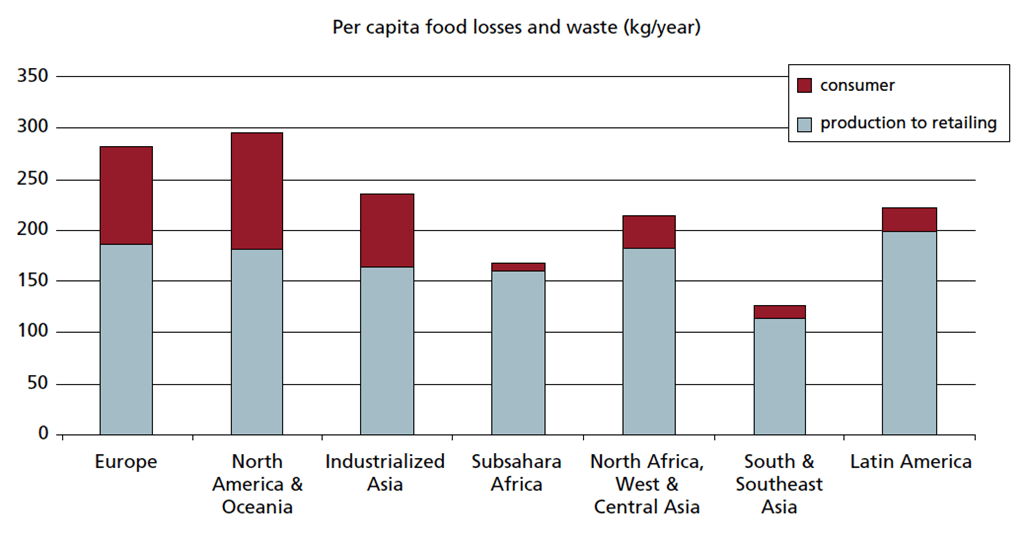
Food waste is a complex social, economic and environmental problem that is having an increasingly negative impact on our world.

wastegraph

There’s no doubt that when it comes to food production, Australia truly is the lucky country. We live in a plentiful country, with some of the world’s most abundant fresh produce and skilful, efficient farmers. Each year, Australia produces enough fresh food to feed 60 million people – that’s nearly enough to feed the nation 3 times over.1
However, recent figures suggest that 4 million tonnes of food is wasted every year in Australia.

food_waste

Of this, 1.38 million tonnes is business food waste and 2.6 million tonnes is household food waste. 2

waste

This surplus food could feed millions of Australians every day. Food gets wasted because we buy more than we need; we cook more than we need; and due to demanding quality standards a lot of produce is discarded because of appearance, despite the nutritional quality still being very good. These food waste facts are startling alone, but when coupled with the fact that 1.2 million Australians do not have access to a safe and nutritious food supply, the situation is staggering.

Many of us eat well and enjoy a varied diet, so it seems strange to be discussing food shortages for Australians; however, for many, access to food is a critical problem. Each year two million Australians will rely on food relief and around half of them will be children who often go to school without breakfast or to bed without dinner. This is where Foodbank, the largest hunger relief organisation in Australia, comes into the equation. Foodbank is a not-for-profit, nondenominational organisation that seeks and distributes food and grocery industry donations to welfare agencies to feed the hungry around the country. The food goes to hostels, shelters, drop-in centres, school breakfast programs, home hampers and emergency relief packages for people in need. Last year alone it redistributed enough food for 28 million meals.

I became involved with Foodbank in 2009 taking up the role of CEO, following retirement from the food manufacturing industry three years earlier. I enjoyed entering the workforce again, and in particular working in the charity sector. Foodbank was initially formed to redistribute wasted food products from Australian food manufacturing and retailing sectors. However, recently the focus has moved to the farming industry.

Foodbank’s Waste Not Want Not program is a unique project that delivers otherwise wasted produce from the Riverina farming community to the tables of hungry families throughout NSW and the ACT. Since the program began in 2011, over 400 tonnes of produce from the Riverina district has been donated. There are plans to roll out the program in many more areas in NSW by 2013. Farmers, including small producers, can donate their fresh fruit and vegetables products that are in excess to demand or not quite up to quality standards, as they are still nutritious and very desirable to feed needy people. Our most common donations from farmers include oranges, pumpkins, onions, potatoes and grain.

There is still a long way to go to achieve an Australia without hunger, but we, as an agricultural community, can play a part to reduce the waste and hunger that exists.

food-waste-hierarchyHeria

Waste Food Hierarchy

This is a very wicked problem that each and everyone of us has an opportunity to make a difference

For more information on Foodbank and how you can become involved, visit www.foodbank.org.au/

1 This article first appeared in RAS Times July 2012.

2 Australia and Food Security in a Changing World. Report of the Prime
Minister’s Science, Engineering and Innovation Council (PMSEIC)
Expert Working Group, 2010.

Conversations of Change

Today my post is going to feature an amazing young woman who is doing agriculture #soproud (excuse the hash tag its a tribute to twitter which has introduced me to whole new cohort of great thinkers that surround and support agriculture right across the nation).

Hello world meet Stephanie Tarlinton

Steph and her parents

Stephanie with her #soproud parents at the recent Dairy Research Foundation Symposium where the audience voted her their favourite speaker.

Today I will be sharing that speech with you but you had to be in the room to understand how powerful it was and wow it was a powerful performance.

Art4agriculuture is also #soproud of Stephanie Tarlinton. She is a graduate from our Young Farming Champions program in 2011 and now a Young Farming Champions’ Ambassador

I first saw Stephanie in a photo and I saw something special and the search began to find out who that girl was.

A little bit of background. In 2004 I was given the task by the RAS of NSW Cattle Council to come up with some ideas to reinvigorate the dairy cattle events at the Sydney Royal Easter Show and if I was going to pull that off successfully I needed to do some serious sponsorship seeking. The obvious first choice here was Semex who are a major sponsor of dairy cattle shows right across the world. So I arranged a meeting with Jim Conroy who heads up Semex Australia. Now Jim is a pretty special man himself and is very committed to investing in youth in the dairy industry.

Jim was on board but it came with one condition and oh boy did that turn out to be an Everest. Jim wanted the Dairy Youth Challenge event to be reinstated onto the dairy cattle calendar at the Sydney Royal Easter show. At the time I had no idea why this event was no longer running but when I told my husband Michael he said “only a mad person would take on that task”. As it turned out adult egos and personalities and politics had shut this event down and it was the Holstein Association of NSW I had to take on and nobody in their right mind did that in those days. Pleased to say those days are well and truly in the past.

So I went back to Jim with my problem and he said Lynne “this time round young people are going to run this event” and he gave me the name of a young woman who equally believes in her peers and she attacked it with gusto with me dodging the slings and arrows.  Anyway we pulled it off. Young people run it today and wow what an event they have turned it into.

6 Youth Challenge Winners NSW Semex team with Dr Neil Moss of Cows r US

This is a picture of the winners of the re-invented event in 2005 and that is Stephanie Tarlinton in the front row. BTW The young man beside Steph in the front row is Mr Cheese from MKR 2014

As it turned out it was to be six years before I met Stephanie at an RAS of NSW Council dinner when she was runner up in the 2011 RAS of NSW Royal Easter Show Showgirl Competition and I asked some-one to introduce us. I was fascinated by everything about her. It was quite obvious that this was a superstar waiting to happen. I invited her to join the inaugural 2011 Young Farming Champions program and was thrilled when she accepted.

So enough about the background this is what she  had to say last week

Slide1

Today I’d like to have a conversation with you,

But firstly so you know who you’re talking to, I’ll tell you a little about myself

I am

  • Firstly a proud dairy farmers daughter
  • The 2011 Land Sydney Royal Showgirl Runner Up
  • An Art4Agriculture Young Farming Champion
  • A National Junior Dairy Judging Final winner
  • A Woolworths Agricultural Business Scholar
  • A Royal Agricultural Society of NSW Rural Achiever
  • A NSW Holstein Youth Exchange Awardee

And a young women who has a degree in Agricultural Business Management, loves to travel and feels just as comfortable in a pair of high heels as I do in my gumboots

My story started growing up on my family’s dairy farm which is located on the far south coast of NSW just outside of the township, Cobargo. My family has a long association with the region and in particular the dairy industry.

I have the deepest respect for the humble dairy cow which has provided for my family and wider community over the last 148 years we have been dairying.

So you ask with five generations of dairy farmers behind me what is it exactly that I am going to talk to you about.

No it’s not the quickest way to move a strip graze fence nor is it the best way to dry out the inside of your gumboot when you misjudge the depth of the creek (however Mum’s good hair dryer can perform this task if she isn’t home)

Slide2

In fact the reason I am here today is to share my experiences of having conversations of change;

Conversations that inspire & engage.

Conversations which have the ability to empower another individual by sharing knowledge and experience.

Such conversations we all have the capacity to have as a way of connecting with those in the community who have not experienced a business/way of life, which is common to us all in room, dairying.

I’m referring to what is more commonly known as a way to help bridge the rural – urban divide.

The Bridge has been built however we need to open the pathway for consumers on either side to be able to connect with those involved in producing our food and fibre products.

With a considerable amount of Australia’s population living in urban centres, those classified as rural including the country’s farmers have an important role to play in reducing the separation between communities.

Engaging in a conversation with someone who has little knowledge of how their food moves from the farm gate to their plate has the potential to give them insights into the real story of modern agriculture.

Connecting with consumers on shared values increases the possibility of forming trust in farming and those whom participate in agricultural business.

Sharing personal stories allows consumers to gain insight and confidence in farming systems, ultimately building connections and breaking down barriers in society which further decreases the divide.

Members from either side of the divide consume food in order to survive and this is a fundamental feature of unity and mutual dependency. A simple discussion on the origin of a food product has the potential for rural person A to connect with urban person B to produce an outcome of greater understanding C.

A + B = C highlights the impact a single conversation can have if society will allow itself the simple pleasure to connect and challenge perceptions.

To quote Ghandi, “be the change you want to see in the world” reinforces the challenge that in order to create ways in which to build relations between the two sectors of society one must accept their role and be prepared to create opportunities for conversation.

For the agricultural sector to develop positive images and perceptions of farming practices and lifestyle, individuals who align themselves with this segment must be prepared to participate in the dialogue.

This is something that after hearing on numerous occasions the comment “oh you don’t look like a farm girl” I regularly seek out opportunities to participate in the dialogue others may see as a waste of time. As the quote behind me states I am the being the change I would like to see and that is having a greater number of consumers with an understanding of just who is putting the milk in their latte and the process it took to get it from the cow to the city cafe.

Slide3

One opportunity I recently had which allowed me to participate in conversations with next generation of consumers was through the Art4Agriculture Archibull Prize program as a Young Farming Champion. In September last year I made my way to a primary and then to a secondary school in Sydney which saw me become their face of farming.

A face which they were not expecting which was clearly indicated to me “oh so YOUR the farmer” with an intrigued look up and down at my business suit and heels, with a laptop and mobile phone in hand.

I see dairy farmers as business people who work in the food supply sector and although we spend time in gumboots they are what I call “tools of the trade” much like my heels I guess!

I took this role on as it allowed me to challenge the stereotype of farmers which is so often poorly portrayed in the media, and provided me with an opportunity to share my experience of growing up on the dairy with children who do not have such a luxury and to share the great story that is dairy.

I would now like to share with you one tool I used which has allowed me to engage in conversations;

This is a conversation I have not only shared with you here today and at my schools last year but it has also been shared with the rest of the world via YouTube, In fact my video has been viewed by over 1500 hundred people, an audience I would have not been able to reach with my messages if it had not been for my desire to connect with others in the community who have been labelled on the urban side of the divide.

I believe that challenging stereotypes through highlighting our connections has the ability to show that as people we both have a mutual dependency on food and therefore on one another as a producer and a consumer

I am proud to come from a dairy farm, to be a small town girl, a rural consumer and I see this as one of my greatest assets, I have firsthand knowledge and experiences of food production and therefore I have something to share through conversation with those whom are classed as being from the bright lights of the city.

Slide5

One girl who calls the bright lights of Sydney home is Year 7 student Sophia, standing second from the left in this photograph. I would now like to take a moment to read you an email I received from this young girl after being to her school

Dear Stephanie,

My name is Sophia and I met you when you visited our school. I am writing to you to tell you how inspiring and amazing your visit was.

My sister Olivia and I both attended your visit and it truly was a life changing experience. As we both live in a very suburban area we don’t get to see a lot of Australian Farmers. What was so incredible about your visit was that you taught our school that farmers are real people too. Your visit and video showed us just how important Australian Farmers are and just how much farmers are like us.

So I am writing to say Thank you. My family and I are originally from NZ however we moved here 5 years ago. I feel like I now understand that the foundation of Australia is made up of Farmers. You have really changed the way I think about farmers and I will now make it my mission to help spread the word, “Farmers are real people too” oh and that “farm girls love their shoes”

Regards Sophia

After reading this email I was touched at how my simple video which showed nothing more than my life on the farm, our girls aka the cows, a few pairs of shoes and some creative dance moves had the ability to inspire a young woman. I was touched at the response I received as for me I was just having a conversation about the everyday things that form life on our farm however for this particular girl my ordinary wasn’t so ordinary.

Slide6

I chose to share Sophia’s story with you as I believe it is an example of how it only takes a small conversation or connection to create big outcomes. For me knowing I had planted a seed in one person’s mind regarding the way she thought about farmers provided me with the greatest sense of satisfaction and determination to then tell others about my story and encourage them to tell theirs.

In my dealings with people in the agriculture sector I have often found farmers to be very humble people, my parents are a great example of this, however I challenge you all to be inspired by the words of William James –

“Act as if what you do makes a difference. It does”

I believe as dairy farmers we make a difference, everyday. Everyday there is fresh, safe healthy dairy products available to consumers which have all originated from the only true white gold, milk. It does make a difference to people’s lives that is because the nation’s dairy farmers got out of bed this morning that have food on their table, jobs to go to, communities to live in, someone to call a neighbour, a friend.

I am confident there are many other ways which you all make a positive difference to someone’s life simply due to your actions as a dairy Farmer.

As farmers if we would like others in the community to acknowledge this difference we make to their lives we must be prepared to share with them, to build trust by finding common values and to firstly acknowledge and be proud of the role we play.

I see no easier way to do this then by having a chat with someone. Whether its a taxi driver, the person next to you on the plane, the person at the supermarket checkout, your hairdresser, or your child’s teacher. Share with them your story, challenge the stereotype, leave them with notion that today they met someone who is PROUD to be a dairy farmer or working in the dairy industry.

Conversations provide a key to reducing the disconnect between the farmers who grow the food and the people who buy and consume it. By acquiring education from individuals like ourselves who have firsthand knowledge in agricultural fields, it will enable those divided by urban boundaries to have informed opinions and increased understandings of what it is exactly that you do.

Actively participating in the conversations is essential for progress to be made in reducing the disparity of knowledge because if we don’t take the initiative to stand up and tell our own story someone else will. And I personally know I’d rather tell my side of the story then have someone with extreme views or uninformed opinions reaching the consumer of a product I’m proud to say I produce.

Slide7

So I would now like to ask those in the audience who are proud to dairy to raise your hand…

Congratulations! I too, am proud to dairy, proud to be a part of a great industry and proud to have such a long family history associated with dairying.

I would now like to ask you all to have a conversation of change, to share your experience and wisdom

And remember every individual has the power to share knowledge regardless of which side of the classroom divide, they take a seat during story telling.

So I challenge you all to be the change we need to see to bridge the divide,

To seek opportunity to engage and educate,

Act as if what you do makes a difference as it does to the consumers of Australia

And finally

Be proud to Dairy, Always.

So in 140 characters “Stephanie stepped out in her black business shoes and her pink lipstick and wowed them with her #proud2dairy message” and she bought many in the audience to tears including me.

Farm Girls Wear Shoes too

Those shoes

This wont be the last time you will hear from Stephanie Tarlinton.

However shortly she is leaving our shores to spend some time with her good friend Leona Dargis in Canada and wont that be a daunting partnership. We hope to share some of this journey with you over the next two years

leona dargis-3

The Yarn so Far

Art4agriculuture takes great pleasure in introducing you to one of our Young Farming Ambassadors. Our ambassadors are young people in the agrifood sector who have dedicated large chunk’s of their lives to promoting agriculture beyond the farm gate selflessly on behalf of their industry and I am highly confident you will see why Kathleen Allan fits the bill perfectly  

The Kathleen Allan story for your pleasure ……………….   

Hi my name is Kathleen Allan and I am excited about the future of Australian agriculture. I would love to share some of my story – the yarn so far…..

SONY DSC

Kathleen and Yoda

I’m a daughter, a wife, a mother, a sister, a farmer, an AGvocate, an AG-educator, a bit of a foodie and a public servant. I am not sure that I do these “jobs” in the correct order or as well as I would like. I am a typical country mum – a jack of all trades and master of none! Like so many others, I try to do everything and seem to have time for nothing.

Copy of bgc yass

My family, lives on a property on the Boorowa River near Yass in southern NSW, where we run a self-replacing, superfine merino flock and operate our award-winning small business Farm Animal Resource Management (farm) – an agricultural education business that was established in 1994 to promote the importance of agriculture in an increasingly urbanised community. Putting my foodie hat on, we also raise very edible breeds of waterfowl and poultry, fatten pigs, and run a range of “house” cows that are used in our educational displays that also provide the raw ingredients for some great home-made cheeses and ice-cream. That’s value-adding at its best – from the paddock to the plate! Oh yes, then there is our Shetland pony, much loved by all of us, especially my young daughters, Bella and Molly.

SONY DSC

As a fifth generation farmer, agriculture is in my blood, and from a very early age I developed a love of farming and animals. I was obsessed with James Herriot’s “All Creatures Great and Small” and like so many teenage girls, I wanted to be a vet. A highlight of my high school years was time spent with my godfather during holidays on King Island in Tasmania. He was the only private vet on the Island, as well as filling additional roles for the Tasmanian and Commonwealth governments.

Lamb marking

With schooling behind me and a “not quite Vet Science score”, I commenced a Bachelor of Rural Science at the University of New England in Armidale. University was great – a lot of hard work, but also a lot of fun. My first 12 months at Uni was spent at St Albert’s College (Albies), and at the end of first year, I took up a position as a Riding School Instructor at the New England Girls School. This position allowed me to have my horse from home as well as gave me suitable “digs” to concentrate on study and assignments. The 4 years of study at Uni flew by and I majored in animal health and sheep and wool production, with an honours thesis on Ovine Johnes Disease. Becoming a vet didn’t seem quite as important as I completed my studies and further developed my interest in the sheep and wool Industry. A highlight in my final year was coming third in the Australian National Merino Breeding Skills Competition and receiving the School of Rural Science Deans Prize. But it wasn’t all sheep and study at uni – I met my future husband David while at UNE, and we both graduated with a Bachelor of Rural Science – my degree with Honours in 2008.

I love wool

I love my wool

Just weeks before I finished my degree, my younger sister Lisa-Jane died suddenly at the age of 16. It was a very tough time for all of us and it was so difficult to return to Armidale to finish those last weeks, cope with exams and submit my thesis. So when I did return to Yass, I threw myself into farm life, helping with our, now struggling, display business and got involved with all sorts of community activities before having a stint in the USA as a Riding Instructor at a Summer Holiday Camp in Maine. The added responsibility that entailed, plus the distance from home, turned out to be a great tonic for me.

Back home after a wonderful adventure, I became actively involved in the local Yass Show and the Royal Canberra Show as an exhibitor, steward, judge and committee member. My mother was elected the first female president of the Yass Show Society, and the great part of having your mum as president of the local show is you are guaranteed to be taken along for the ride, whether you want to be or not.. I managed the farmyard nursery for several years and was a steward and committee member in the merino sheep section, while also taking on the duties of Publicity Officer. Wearing this hat, one of the highlights of my time with our local show was when we managed to get city TV cameras out to the event for some excellent coverage! I was a Showgirl and an inaugural member of the Agricultural Societies Council of NSW Youth Group. These experiences were very important for me and I encourage any young people interested in being part of agriculture and regional areas to get involved in their local show. This is a great way to contribute to your community and an excellent way to meet other passionate and enthusiastic people.

Probably one of my greatest achievements when I returned home to Yass after finishing university was my involvement in developing the Johnes Disease management plans for shows – for sheep, cattle, goats and alpacas. This gave me first hand experience developing and applying practical risk management strategies to ensure continuation of sheep showing in NSW. I got to work with Commonwealth and State and Territory animal health regulators and policy developers as well as vets, sheep industry representatives and Royal and State Show Society associations. A satisfying and significant application of my thesis and uni studies!

SONY DSC

Finewool Merino

In 2001 I won the NSW Young Australian of the Year Award for Regional Initiatives for my work contributing to the management of Ovine Johnes Disease and the promotion of agriculture. I was thrilled to be later invited to be an Australia Day Ambassador for Gunning during the Year of the Outback. In 2002 I was awarded the UNE Young Distinguished Alumni Prize for my contribution to agriculture. A very proud moment, but one of the most humbling experiences for me, was being asked to present the Occasional Address at the UNE Graduation Ceremony that year – amidst many excited graduands and in front of those awe inspiring academics and community leaders that make up the fabric of this prestigious university..

Agriculture is not just farming

For the last 12 years I have worked for the Australian government in Canberra. I am what is known as a public servant. During this time, I have held several roles that are all very relevant to the future sustainability of Australian agriculture. Initially working in technical and scientific roles, for the last 8 years, after finding a real love for communication and stakeholder engagement, I have worked in a number of professional communication roles in the areas of agvet chemical regulation, animal welfare, food policy and water management. I am currently working on chemicals and plastics regulation reform – an important issue given all the challenges facing the Australian manufacturing industry. Access to well regulated chemicals is crucial throughout the agriculture supply chain. I really enjoy working for the Australian government and being part of the Australian Public Service as it offers diversity, great career development opportunities, excellent pay and conditions as well as job satisfaction and the flexibility to pursue other passions.

From the paddock to the playground

Breast cancer promo

Breast Cancer Prevention Promotion Day

For the last 18 years I have been part of our highly successful, award-winning family business, farm animal resource management (f.a.r.m).Under the f.a.r.m. banner, we provide farm animal and agricultural education displays at schools, festivals, and agricultural and royal shows throughout Australia. These displays are a way of improving the understanding of where our food and fibre comes from. I am very proud to have worked closely with my mum as she passionately endeavours to help city families understand and value the importance of agriculture.

miss moo adelaide

We have done some pretty amazing displays and events over that time including managing the first live birthing centre in the ACT, successfully staging the biggest farmyard nursery for the last Royal Easter Show at the old grounds at Moore Park and hosting the longest running farmyard nursery display at a major festival – our Patting Paddock was at Floriade in Canberra for 30 days! Our well known cow milking demonstrations have been featured at the National Science Festival, Floriade and other major exhibitions. We have had a cow in the Channel 9 studio in Sydney for Mornings with Kerri-Anne, featured with the cows in several children’s TV shows, as well as managing live TV broadcasts with some rather high profile news and weather presenters. We had our farm/B&S ute and poll dorset wether in a huge chesty bonds shearers singlet as part of the Patting Paddock display at the Deniliquin Ute Muster. And yes, there was that “Farmer wants a Wife” episode too! Last year we did a full cow milking and dairy products display on the lawns outside the ABC studio in Canberra, in full view of all passing traffic, and the program was broadcast live for 2 hours. We have managed media launches for major industry associations at venues such as the Exhibition Park in Canberra, the National Convention Centre and Old Parliament House. To extend the diversity of our work, we have also been known to don period costume at some major heritage events throughout the ACT region.

SONY DSC

Our “Farm to You” education programs, Wonderful Wool, Exciting Eggs, Fabulous Fibres and Marvellous Milk have been developed over the last 10 years with the culmination being the creation and staging of a series of Milking Barns at major shows including the Canberra Royal Show, Sydney Royal Easter Show, Royal Adelaide Show, Ekka in Brisbane and the Royal Melbourne Show. The statistics are scary! At last count, our team of wonderful cows have probably done more than 1200 Milking Barn sessions, allowing nearly ½ million people to learn “where milk comes from”.

royal melbourne show team

Royal Melbourne Show Team

The work of farm is all about ‘bridging the city country divide’, teaching city children and families where our food and fibre comes from and promoting the importance of agriculture. As practicing farmers we are passionate about our job and are committed to providing hands-on opportunities for city families to enjoy and learn about our livestock industries, understand modern agriculture, and hopefully pursue a career in this industry of the future. That is why I am so excited about 2012 being the Australian Year of the Farmer. This year-long celebration of the vital role farmers play in feeding, clothing and housing us all, is long overdue and the Governor General’s words in launching the Year ring very true – “its purpose is to celebrate all those who contribute – and have contributed –to our rich rural history”. In doing so it will introduce Australians to the farmer of today, and smash a few stereotypes along the way. Recently mum and I were thrilled to accept an invitation to act as Champions for the Australian Year of the Farmer.

SONY DSC

To celebrate the role that farming and agriculture plays in Australian life and share some of our experiences we were really pleased to be part of FarmDay in May. On a very wet and windy day – the southern tablelands at its best – we hosted six families at ‘Bindaree’ for a day of fun and friendship. We did sheep shearing, cow milking, cream separating and butter making, as well as a farm walk to see some of the revegetation and rehabilitation work we have undertaken with Greening Australia over the last 12 years.

Farmday milking

I think the highlight for the younger children visiting the farm was going for a pony ride in pouring rain! We finished the day in front of the warm fire with some hot soup, crusty bread and home-made haloumi for the adults while the children managed some very sheepish craft activities and demolished ‘those sheep cupcakes’……

FarmDay cupcakes

The Legendary Farm Day Sheep Cup Cakes ( more on these in another post)

Wonderful wool

I love superfine merinos and the wool they produce. Inspired by the legacy of a grandfather I never met – a very talented sheep breeder and woolclasser with an eye for a good-framed animal carrying a clean, white, soft-handling fleece, I have developed a real passion for sheep and wool. Motivated by my mothers drive to pursue this same dream to produce high quality wool on a relatively small scale, I have been able to maintain this involvement with the fibre I love. Wool is an amazing product – it’s natural and versatile, has a timeless history and an exciting and sustainable future.

nan jane and bella

 Nan Jane and Bella

For a long time I have had this romantic idea that it would be great to wear something made from our wool, and given the size of the Australian wool industry you might be surprised to know that this is not that easy to achieve.

molly in the wool

 Molly in the wool

The Bindareelan Wool concept was conceived in 2008 when it became very obvious that there was a real demand for premium quality Australian merino wool products suitable for use in an increasingly popular handicraft market. This demand coupled with an aim to diversify and value-add the family’s high quality but relatively small annual wool clip and low-value coloured wool into a boutique product led to the launch of Bindareelan Wool.

SONY DSC

bindareelan wool

Our location in the Capital region, an area renowned for an interest in paddock to plate and therefore, grass to garment, with consumers enjoying a higher than average disposable income, means we are ideally placed to position our product. Based on high quality raw wool from white commercial superfine merinos and a small flock of coloured merinos, used in our educational displays, Bindareelan supplies a range of superfine merino wool products. This range includes individual raw fleeces, scoured wool, wool tops, felting batts and 8ply yarn in skeins or balls in a range of white and natural colours, available direct to buyers or through local specialty yarn and handicraft stores and markets. We think Bindareelan Wool is an exciting initiative tailored to meet the 21st century resurgence in interest in using natural, clean, sustainable fibres.

Bella

Bella

The future

Recently I attended a forum hosted as part of the National Farmers Federation (NFF) Blueprint for Australian Agriculture consultation process. At the end of the forum, we were asked to comment on our vision for Australian agriculture. My vision for Australian agriculture is:

Australian agriculture – a diverse, inclusive and coordinated industry that is economically and environmentally sustainable and valued by the whole community.

I saddens and disappoints me immensely that Australian agriculture is so fragmented. We need to be coordinated and to be coordinated we need to be inclusive. As an industry, its is pivotal we acknowledge the contribution of everyone in our industry regardless of their size, the role they play or the product they produce. On the other hand, in order to be valued by the community, we must tell our story, we need to be innovative in our farming practices, we need to be committed to best-practice farming techniques and strive for continuous improvement. Most importantly though, we need to know who our customers are, engage with them so that we can understand their needs and provide a range of products that meet those needs.

SONY DSC

wool products

The reality of a diverse and competitive job market means that at the moment our industry in the main attracts those with a passion based on their upbringing and background or a connection with some awesome childhood experience that has aroused their curiosity about career opportunities in agriculture.  Whilst it will certainly help this dilemma won’t disappear if agriculture or primary industries are included in the primary school curriculum or as elective units in the high school curriculum. This is part of the answer, it is not the solution. We should also focus on providing information and resources for teachers to use and promote agriculture and farming as a context for learning across all curriculum areas. But in order for the whole community to value Australian agriculture, everyone, not just students or children, need to have ongoing access to a range of opportunities to engage in and learn about agriculture. As farmers and producers we need to tell our story.

The big idea

My years of experience in this area tells me the best way to engage the Australian community with agriculture and farming is through food. And there is no doubt that modern consumers want to know as much as possible about what they eat. In particular, where it comes from, how it is produced, what standards apply, the transport methods used and the costs associated with producing the food. Let’s expand the ‘paddock to plate’ concept and include the farming story by being part of the cooking show revolution or partner with some of our leading chefs and restaurants. Most importantly though, we shouldn’t rely on small organisations or well-meaning individuals to Champion the cause – let’s all get behind it together. After all, if you want to eat, you need farmers, and when the whole community understands and values where their food comes from, we will be able to encourage a wider range of participation in agriculture as a career.

Patting Paddock

 Patting Paddock

I want to be part of the future for Australian agriculture and, as a mother I want my daughters to value their rural heritage and participate in taking this vital industry forward. We live in exciting and challenging times. The global population is increasing rapidly and Australia can continue to contribute to feeding that population in sustainable and innovative ways through the efforts of passionate and enthusiastic young people in agriculture.

Ask a Farmer

Today’s guest post is by Kylie Stretton one of the founders of Ask an Aussie Farmer– “An idea grown by real Aussie farmers so you can have your food and fibre questions answered by those who produce it for you”.

Kylie Stretton Photo Vicki Miller Photography

This group are

 “passionate about Australian farming, with expertise and first-hand knowledge across a broad expanse of agriculture in Australia, including access to experts and professionals. We reside all over this country and some even live far away from our shores but are still involved in the diverse industries of Australian agriculture. The reason for hosting this page is so those that live, breath, know, and are enthusiastic about Aussie Ag can answer your questions and tell their stories…”

Well done Kylie and Team

We first met Kylie when we partnered with MLA to roll out the Archibull Prize at the Ekka in 2011. The winning school as part of their prize got a visit from a Beef farmer and Kylie was that farmer

Farmer Kylie with winners of Archibull Prize at Ekka 2011

The Kylie Stretton story …….

Planting Those Seeds of Excitement

In 1820, Hertfordshire, England, my Great-Great-Great- Great Grandfather, George Hobler decided to add farming to the list of his family’s noble professions. His Grandfather was an eminent watchmaker; his Uncle a tenor who performed at Westminster Abbey; his father was the Chief Clerk to the Lord Mayor of London for 50 years and written about by Charles Dickens on more than one occasion; and his brother a Barrister and Author.

After spending five years working on various farms in England, George was lured by the prospect of growing super fine wool in Australia. So in 1825 he, his wife Ann, their two children (nine more were born in Australia), ten stud Merino sheep and one of Australia’s first purebred Devon heifers boarded a ship and set sail to Van Diemen’s Land.

Add in different lines of the family tree which contain pastoralists from Cameron’s Corner, young stockmen, soldiers, my Grandmother who ventured from Sydney to Boulia, in outback Qld to be the first female bookkeeper on that particular station (pretty rare in those days), even a Spanish Princess and the result is seven generations down the track, we’re still raising beef. Although each generation has moved a bit further north, and we now Brahmans in North Queensland.

Our latest purchases

I grew up on a cattle station near Charters Towers, battling drought (I wrote a blog about it here) for most of the time we were there.

Buzz and I at one year old.  Buzz lived until 17 and will always hold a special place in our hearts.

When I got to Grade 12 I wasn’t sure what to do; but I knew I loved station life and I loved kids so I scoured the ads in the Queensland Country Life, answering many hoping to become a governess. I was very excited when I got offered a job in the Northern Territory (until I realised I had to go on a plane for the first time).

Dad, I and Mac, smiles in times of drought 1993

Farmer Gets a Wife

I staggered off that mail plane a little worse for wear, to clap eyes on my future husband (another blog about it here). I hope future generations tell that story in years to come!

The Farmer Gets A wife Photo by Vicki Miller Photography

So fast forward twelve years and my husband and I with two young children have just started a new business; he’s a livestock agent in North Queensland, our market’s underpinned by live export.

At the Stockyards Photo by Vicki Miller Photography


We also have a small but growing herd of Brahman steers.

Ella-Beth and Clancy with steers

I’m floating around, not sure what I want to do with my life, happy to be a part of the business but still feeling something lacking within myself.

Shane, I, Clancy and Ella-Beth

Then along comes the Live Export uproar. Tips our world upside down, along with many others. I’ve always been passionate about rural Australia, but was never sure what to do about it. All of a sudden I knew what I could do. The world was opening up with social media, but that was not working in our favour. So I dived in head first and starting advocating for the live export industry via Facebook, Twitter and Blogging. Along the way I “met” many other farmers, and realised it wasn’t just us that there was misunderstanding about. It was food and fibre production as a whole.

How social media changed my life

Once I started looking into it, there were already amazing people doing amazing things when it comes to teaching our future generations about feeding and clothing the world. In September 2011, I was given a great opportunity by MLA, to fly to Brisbane and speak to school children about growing up on a cattle station (yet another blog here) which helped bring me out of my shell and made me realise that what I had to say was interesting.

Farmer Kylie addressing whole school

I now even have the confidence to approach tourists who come out to have a look at our weekly cattle sale; they appreciate getting a little tour of the saleyards, with explanations and interesting statistics thrown in.

I have learnt so much in the last twelve months, so many interesting, quirky and exciting facts about agriculture. I am more excited and proud than ever to be a part of such an innovative industry. Technology has changed the face of Australian Agriculture. The industry has advanced from the images of “Farmer Joe” in the dusty paddock to images of young men and women from diverse backgrounds working in a variety of professions. Images now range from a hands-on job in the dusty red centre to an office job in inner city Sydney. So many opportunities, so many choices.

Trying to beat the storms

Australia really is the lucky country with 2.15ha of arable land to each person of our population. That’s one of the highest ratios of any country in the whole world. But only 3% of our employed population work in Agriculture. That’s not many people looking after a huge landmass. Incredibly 54% of our land is used for some sort of agricultural enterprise. We produce 93% of the food used domestically while still exporting a whopping 60% of what we grow to other countries which is so important with the world population growing bigger and bigger. However mass production isn’t everything. We are doing these amazing feats on the driest inhabited continent on Earth.

Photo of me taken by Ella-Beth (8)

So Australian Farmers are world leaders when it comes to farming efficiently and sustainably. It’s vital that we continue on this track and getting better and better with advancing technology. It’s a difficult juggling act producing enough food and fibre for a rapidly expanding population while still caring for the environment in the best way possible. Without a healthy environment we can’t grow such high quality produce.

Young people are the future lets work with them

Today’s children are tomorrow’s decision makers. Kids are like sponges, if you’re excited about what you’re teaching them, it’s contagious. It’s so important to get them involved or at the very least give them an understanding about all sorts of agriculture so they are equipped to lead further generations into a future which has a secure supply of food. And that starts with us.

Warm Welcome from Grade Ones Nashville State School

We need to start planting those seeds of excitement in children from all walks of life right now. Australian agriculture has such a fascinating history and promising future. I’m proud that my family has played a part in it for nearly two hundred years, I love that I’m a part of the present and I’m excited about my children being a part of it in the future. I hope that seven generations down the track my Great-Great-Great-Great Grandchildren are still a part of agriculture, and look back on my generation and are as inspired as I am when I look back on previous generations.